WhatsApp:+86 19933284353

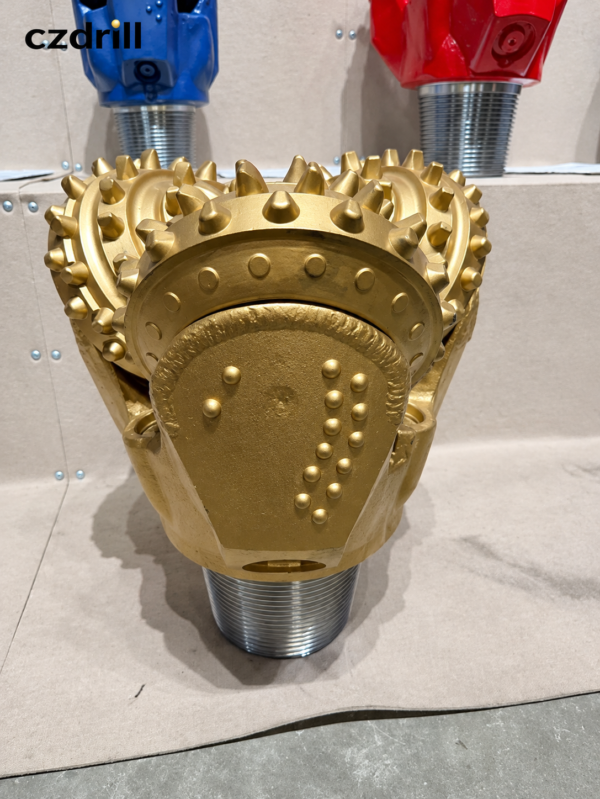
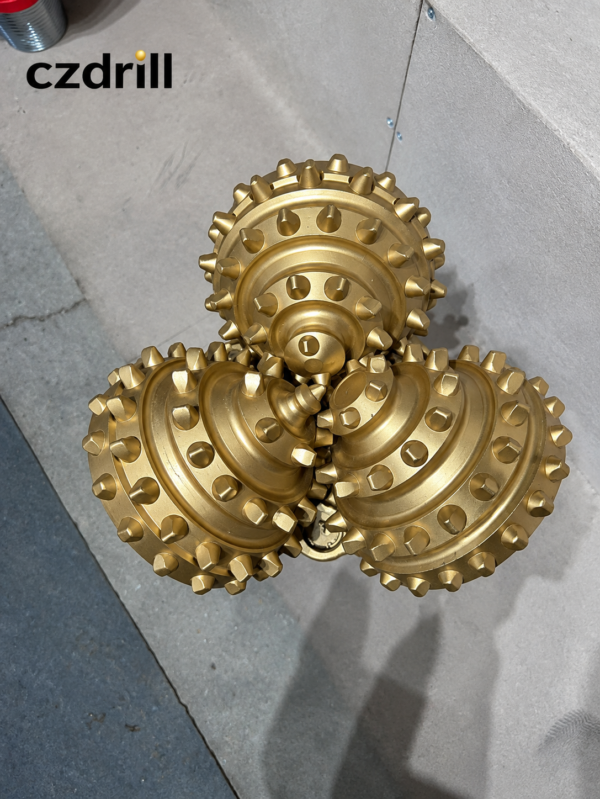
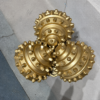
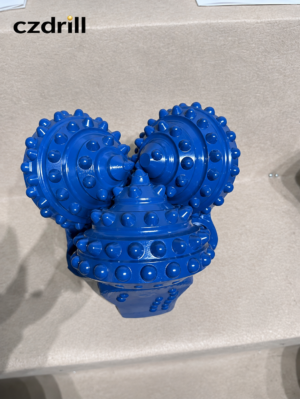
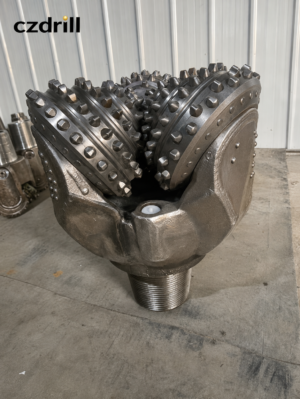
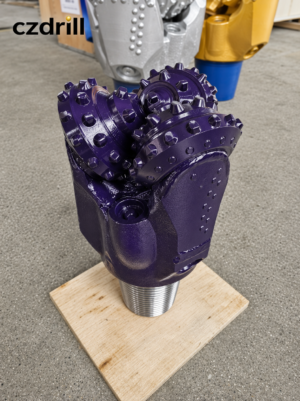
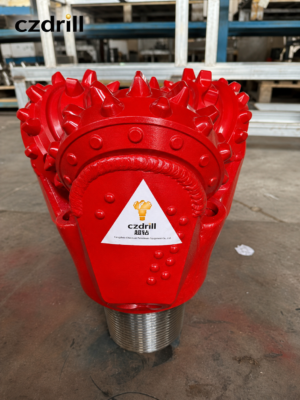
12 1/4 Inch IADC 537G Tricone Bit Sealed Bearing
12 1/4″ (311 mm) IADC 537G Tricone Drill Bit | TCI Sealed Bearing
This 12 1/4 inch (311 mm) IADC 537G tricone drill bit is designed for soft to medium-hard formations with abrasive interbeds. High-strength tungsten carbide inserts deliver excellent wear resistance and impact toughness, outperforming steel-tooth bits in abrasive rock. The sealed journal bearing (elastomer or metal-to-metal seal optional) reduces bearing wear and supports longer single runs, while G-type gauge protection stabilizes the borehole diameter and reduces reaming. With high load-bearing capacity, it suits medium-to-large rotary drilling rigs, and mud circulation passages and nozzles provide effective cooling and cuttings removal. API compliant, with API REG thread available. IADC code can be customized.
Applications: water well drilling, oil and gas drilling, geological exploration, mining engineering, medium-to-large pile foundations, trenchless pilot holes and mine drilling.
What Is a 12 1/4 Inch (311 mm) Tricone Drill Bit?
A 12 1/4 inch IADC 537G tricone bit (nominal diameter 311.1 mm) is a heavy-duty rotary drilling tool engineered for demanding borehole construction. Built with three rotating cones fitted with precision-arranged cutting elements, this tool delivers high penetration rates and exceptional stability in complex geological conditions. It serves as an industry-standard dimension worldwide for drilling primary borehole sections, surface casings, and production intervals.
How three-cone rolling and crushing action breaks rock
The rock-fragmentation mechanism of this tricone bit relies on combined mechanical forces:
- Compressive Crushing: As the drillstring applies downward load, the tungsten carbide inserts press directly into the formation, exceeding the rock’s compressive strength to generate micro-fractures.
- Rolling Impact: The three independent cones rotate on their own bearing axes while revolving around the hole center, delivering continuous point impacts across the bottom of the hole.
- Shearing and Gouging Action: Engineered cone offset creates a scraping motion that gouges the rock between impact craters, efficiently clearing fractured material and maximizing rate of penetration (ROP).
Why large-diameter bits with high load-bearing capacity suit medium-to-large rotary rigs
Operating a large-diameter tool like the 311 mm IADC 537G drill bit requires equipment capable of delivering high weight on bit (WOB) and substantial rotational torque:
- High Structural Integrity: The robust alloy steel bit body and heavy-duty bearing journals withstand extreme axial loads without deformation.
- Rig Power Matching: Medium-to-large rotary drilling rigs provide the necessary torque and hydraulic horsepower required to drive large cutting structures effectively.
- Extended Run Stability: The balanced three-cone geometry dampens lateral vibration, protecting the drillstring components and maintaining strict vertical hole control during deep drilling operations.
Understanding the IADC 537G Code
Selecting the correct bit requires understanding the International Association of Drilling Contractors (IADC) classification system. The 12 1/4 inch IADC 537G tricone bit uses this standard code to clearly define cutting structure, rock hardness compatibility, and bearing design. When you need dependable drilling metrics, our IADC 537 tricone bit configuration provides an exact standard for challenging drilling environments.
Series 5: insert (TCI) bit for softer-to-medium formations
The first digit indicates the tooth material and operational formation range. As a Series 5 tool, this bit features tungsten carbide inserts (TCI) engineered specifically for soft-to-medium formations with low compressive strength, offering far greater wear resistance than traditional milled-steel teeth.
Type 3: formation sub-classification
The second digit defines the formation hardness grade within the series. Type 3 indicates harder, more abrasive medium formations, utilizing durable insert profiles and specialized spacing designed to crush tough rock strata without premature insert breakage.
Feature 7: sealed journal bearing with gauge protection
The third digit specifies bearing construction and gauge design. Feature 7 represents a premium sealed journal bearing layout with integrated gauge protection, isolating critical moving parts from abrasive drilling mud while maintaining full cutting diameter during heavy loads. For operations in slightly softer profiles, operators frequently compare this with an IADC 517 TCI tricone drill bit to optimize overall rate of penetration.
G suffix: reinforced gauge protection
The additional “G” suffix stands for extra gauge row reinforcement:
Enhanced wear resistance: Extra carbide inserts on the cone gauge surfaces maintain exact hole size.
Minimized under-gauge risk: Protects the bit body against abrasive sidewall wear in deviated or deep holes.
Extended bit life: Prevents premature taper wear and protects following drill strings.
IADC code can be customized on request
We manufacture and supply drilling tools matched directly to your specific rig parameters and geological logs. If downhole conditions shift, every bit structure—from cutting geometries to bearing assemblies—can be fully customized to meet your exact project requirements.
Key Specifications
Every 12 1/4 inch IADC 537G tricone bit we build is engineered for dependable cutting efficiency and durability across demanding strata. By maintaining tight machining tolerances and strict quality controls, we ensure every bit withstands high downhole loads and abrasive wear. Learn more about our manufacturing capabilities and standards for rotary drilling equipment.
Table: diameter, IADC code, tooth type, bearing type, seal options, API standard, API REG thread
| Parameter | Specification Details |
|---|---|
| Nominal Diameter | 12 1/4 inch (311.1 mm) |
| IADC Code | 537G (Custom codes configurable on request) |
| Tooth Type | TCI (Tungsten Carbide Insert) |
| Bearing Type | Sealed Journal Bearing / Sealed Roller Bearing options |
| Seal Options | High-temperature Elastomer O-ring / Metal-to-Metal Face Seal |
| Gauge Protection | Reinforced “G” Type carbide gauge inserts |
| Thread Connection | Standard API REG Pin Thread |
| Standard Compliance | API Standard Manufacturing & Quality Control |
Why Choose a TCI Tricone Drill Bit?
When you are running a heavy rotary rig, tripping pipe just to replace a worn-out bit burns time and operating budget. That is why we engineer the 12 1/4 inch IADC 537G tricone bit with tungsten carbide inserts (TCI) rather than standard milled steel teeth. For mid-to-hard abrasive layers, TCI design delivers the cutting endurance and structural integrity needed to stay downhole longer.
Reviewing a comprehensive procurement guide for tricone drill bits helps match tooth metallurgy to downhole conditions, ensuring you get the maximum return on your tool investment.
Tungsten carbide inserts vs. steel teeth: wear resistance and impact toughness
Steel tooth bits work well in soft, unconsolidated ground, but they quickly dull, round off, and lose gauge when encountering hard rock. Our TCI compacts combine high hardness with superior fracture toughness to crush rock under high weight on bit (WOB) without premature insert breakage.
| Feature | Tungsten Carbide Inserts (TCI) | Milled Steel Teeth |
|---|---|---|
| Material Hardness | Extremely high wear-resistant tungsten carbide grades | Machined alloy steel with hardfacing |
| Wear Mechanism | Gradual, uniform abrasive micro-wear | Rapid tooth flattening and crest erosion |
| Impact Toughness | Engineered compact shapes resist chipping and shearing | High impact absorption, but prone to tooth breakage |
| Downhole Life | Significantly longer single-run rotating hours | Shorter operational runs before replacement |
| Recommended Usage | Abrasive, medium to hard compressive rock | Soft, non-abrasive sedimentary layers |
Performance in abrasive rock strata
In abrasive geology like quartz-rich sandstone, cherty limestone, or interbedded shale, cutter integrity dictates your rate of penetration (ROP). The IADC 537 tricone bit features conical and chisel-shaped inserts pressed securely into the cone steel:
- Sustained Puncture Force: Hardened insert tips maintain high point-loading to fracture medium-hard formations cleanly across thousands of rotations.
- Gauge Protection: Tough carbide inserts placed along the heel and gauge rows shield the cone steel from perimeter wear, holding full hole diameter.
- Cost Per Meter Reduction: By preventing insert loss and retaining aggressive cutting action in abrasive strata, this bit maximizes rotating hours and slashes tripping downtime.
Gauge Protection (G Suffix) Benefits
The “G” suffix on our 12 1/4 inch IADC 537G tricone bit highlights advanced gauge row reinforcement. In demanding medium-hard formations, lateral abrasion aggressively grinds down conventional bit corners. We integrate premium tungsten carbide compacts along the cone heel and gauge surfaces to lock in the bit’s true diameter, delivering consistent drilling efficiency.
| Gauge Feature | Standard Cone Profile | G-Suffix Reinforced Cone | Field Benefit |
|---|---|---|---|
| Insert Material | Standard hardfacing | Dedicated carbide inserts | Superior wear resistance |
| Gauge Contact | Single point | Multi-point contact row | Stable borehole geometry |
| Drift Assurance | High risk of taper | Full 12 1/4″ gauge retained | Smooth casing clearance |
Stabilizes borehole diameter
- True-to-Gauge Geometry: The reinforced heel inserts maintain continuous 12 1/4 inch (311.1 mm) drift diameter throughout long runs.
- Minimized Vibration: Stable gauge contact centers the bit in the hole, reducing destructive lateral whirl and prolonging bearing life.
- Uniform Wall Quality: Controlled wall clearance produces smoother wellbores, ensuring trouble-free logging and casing runs.
Prevents hole shrinkage
Abrasive rock formations quickly erode unreinforced steel cones, turning a nominal 12 1/4 inch profile into a tapered cone. This causes severe borehole pinch that traps drill strings and destroys replacement bits. Our reinforced inserts act as an unyielding cutting and rubbing shield, eliminating gauge loss even when cutting through abrasive interbeds.
Reduces reaming workload
Pulling an under-gauge bit leaves an undersized hole that requires slow, expensive reaming runs before the next bit or casing string can proceed. By preserving true diameter from spud to total depth, our G-suffix design cuts out unnecessary reaming trips, saving critical rig hours and preventing the extra downtime needed to run a dedicated tricone hole reamer just to restore nominal clearance.
Mud Circulation and Nozzle Design
Hydraulic efficiency is critical when running a heavy-duty roller cone tool downhole. On our 12 1/4 inch IADC 537G tricone bit, the fluid flow paths are precision-machined to direct circulation media straight to the bottom of the hole and across the cone faces.
Cooling and cuttings removal with drilling mud or clean water
Whether your rig circulates treated drilling mud or clean water, proper fluid dynamics perform two crucial functions:
Thermal Management: Continuous fluid flow dissipates friction-generated heat across the cutting structure and protects the sealed bearing tricone bit assembly from thermal breakdown.
Rapid Evacuation: High-velocity jets instantly flush broken rock fragments away from the tungsten carbide inserts, sweeping cuttings up the annulus and preventing cone balling.
Why efficient hydraulics improves penetration and bit life
Without effective fluid circulation, crushed rock settles on the borehole bottom, forcing the inserts to regrind loose fragments instead of crushing fresh formation. Optimized nozzle velocity clears the cutting face immediately:
Higher Rate of Penetration (ROP): Inserts exert full mechanical energy directly into uncut medium-hard rock.
Extended Wear Life: Eliminating bottom-hole regrinding reduces abrasive wear on both the insert tips and the cone shell steel.
Borehole Cleanliness: Superior sweep efficiency keeps operations running smoothly across demanding intervals, matching the performance standards required when transitioning drilling programs between roller cones and tools like a PDC drill bit with 1613 cutters.
Maintaining balanced hydraulic flow on every run ensures this 311 mm IADC 537G drill bit delivers maximum footage and lower overall drilling costs.
Suitable Formations
Our 12 1/4 inch IADC 537G tricone bit is engineered specifically to tackle medium to medium-hard drilling environments where standard cutters wear down prematurely. We match cutting structure durability with high-impact tungsten carbide inserts to maintain steady penetration rates through tough, abrasive subsurface layers.
Shale, limestone, sandstone
This 311 mm IADC 537G drill bit excels in competent sedimentary formations, including abrasive sandstones, dense limestones, and hard, consolidated shales. We optimize insert projection and spacing to crush dense rock efficiently under heavy downhole loading, preventing insert breakage while maintaining clean cuttings evacuation.
Formations containing quartz nodules and interbeds
Interbedded strata and formations loaded with chert streaks or quartz nodules generate intense impact shocks. The specialized tooth geometry of our IADC 537 tricone bit absorbs extreme impact forces when crossing boundary layers, resisting tooth shear and maintaining cutter stability across erratic transitions.
Medium compressive strength, moderately abrasive strata
For geology exhibiting medium compressive strength alongside moderate abrasiveness, this sealed bearing tricone bit balances wear resistance with structural toughness.
- Impact-resistant cutting structure: Designed to crush high-strength rock without premature tooth spalling.
- Reinforced outer protection: Protects the cone shell in abrasive zones to keep the bit running to target depth.
- Full-gauge retention: Holds true hole diameter across the entire interval, eliminating costly reaming trips.
Applications of a 12 1/4 Inch Tricone Bit
A 12 1/4 inch IADC 537G tricone bit provides the structural strength and cutting power needed across severe, abrasive drilling operations. We design these tools to maintain hole diameter and high penetration rates in tough conditions.
Water well drilling
Deep water extraction requires cutting through mixed rock formations without gauge wear. Utilizing an efficient tricone bit for water well drilling keeps the hole straight through limestone, shale, and hard sandstone layers, ensuring seamless casing installation.
Oil and gas drilling
In oilfield operations, the 12 1/4 inch diameter is standard for drilling intermediate casing sections. The durable cutting structure handles interbedded rock strata and abrasive intervals reliably, preventing premature bit trips.
Geological exploration
Mineral assessment and stratigraphic testing demand clean, stable boreholes through alternating rock hardness. The balanced insert design minimizes hole deviation and holds tight tolerances during extended runs.
Mining engineering
Mine sites deploy this bit size for blast holes, drainage wells, dewatering projects, and ventilation shaft pilots. For custom hole-opening rigs and large-diameter reaming assemblies, we also supply matching GT537 tricone cone cutter units built with identical carbide structures.
Medium-to-large pile foundations
Large civil engineering projects require solid rock sockets for bridge piers, building caissons, and heavy foundations. This bit penetrates hard rock layers efficiently, delivering vertical precision and high load-bearing borehole walls.
Trenchless pilot holes
For utility pipeline installations and horizontal directional drilling (HDD), creating an exact pilot bore through solid rock is critical. This bit resists gauge rounding and steering drift, ensuring an ideal path before final reaming passes begin.
How to Choose the Right Tricone Bit
Selecting the right roller cone tool ensures lower drilling costs and prevents premature failure downhole. When you evaluate a 12 1/4 inch IADC 537G tricone bit, matching your tool directly to lithology and rig capacity is essential for maximum rate of penetration (ROP).
Formation hardness and abrasiveness
The primary factor in choosing an IADC 537 tricone bit is rock compressive strength:
Medium to medium-hard rock: Ideal for limestone, hard sandstone, and shale interbedded with abrasive streaks.
Tungsten carbide inserts: Chisel-shaped inserts deliver optimal gouging and crushing action without chipping on hard stringers.
Formation evaluation: For uniform, non-abrasive soft formations where shearing is preferred over crushing, operators sometimes alternate to fixed-cutter designs like a spherical profile PDC drill bit.
Rig torque, weight on bit and rotation speed
Your drill rig must deliver the correct mechanical energy to run a 311 mm IADC 537G drill bit efficiently:
Weight on Bit (WOB): Requires adequate pull-down weight to crush medium-hard formations effectively.
Rotary Speed (RPM): Requires moderate rotation speeds to maximize bearing life while maintaining steady penetration rates.
Torque Capacity: Larger 12 1/4″ cones require sufficient rotary drive torque to prevent stalling downhole.
Seal type and API REG thread connection
A reliable journal bearing assembly keeps your operation running continuously:
Journal bearing protection: Choose a sealed bearing tricone bit to keep lubrication clean and block abrasive cuttings from entering the bearing package.
Thread connection: Standard large-diameter bits use an industry-standard API Regular (REG) pin connection to ensure secure make-up torque and seamless rig compatibility.
Short selection checklist
| Step | Parameter | Recommended Selection for 12 1/4″ 537G |
|---|---|---|
| 1 | Target Strata | Medium to hard limestone, dense sandstone, abrasive layers |
| 2 | Cutting Structure | TCI with reinforced chisel inserts |
| 3 | Gauge Demands | “G” enhanced gauge protection for tight borehole tolerance |
| 4 | Bearing Assembly | Sealed journal bearing package |
| 5 | Application Goal | Oilfield, deep boreholes, or heavy-duty tricone bit for water well drilling |
FAQ
What does IADC 537G mean?
The IADC 537G designation defines the cutting structure, bearing design, and gauge features of the bit:
- Series 5: Identifies a tungsten carbide insert (TCI) roller cone design built for soft-to-medium formations with low compressive strength.
- Type 3: Specifies the tooth profile and spacing configured for firmer, semi-abrasive rock intervals.
- Feature 7: Designates a sealed journal bearing with standard gauge protection.
- Suffix G: Indicates reinforced gauge protection, incorporating extra tungsten carbide compacts on the cone heels to maintain full hole diameter.
Can the IADC code be customized?
Yes. We adjust insert shapes, carbide grades, bearing packages, and nozzle arrangements to match specific lithology challenges and rotary drilling setups.
What formations suit a 12 1/4 inch tricone bit?
The 12 1/4 inch IADC 537G tricone bit works reliably in medium-hard, abrasive strata. Typical formations include:
- Hard shale and compacted mudstone
- Sandstone with quartz stringers
- Dense limestone and dolomite interbeds
What thread connection does this bit use?
A standard 311 mm IADC 537G drill bit features an industry-standard 6 5/8 inch API Regular (REG) pin connection, ensuring dependable torque transmission and direct compatibility with standard drill collars.
Is this tricone bit API compliant?
Yes. Every sealed bearing tricone bit we manufacture follows strict API and ISO quality standards for dimensional tolerances, heat treatment, and thread profiling.