WhatsApp:+86 19933284353

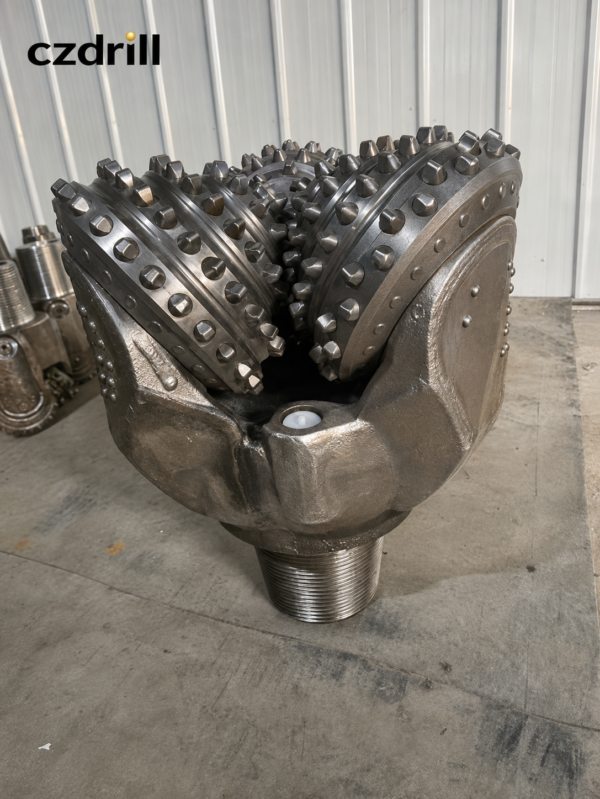
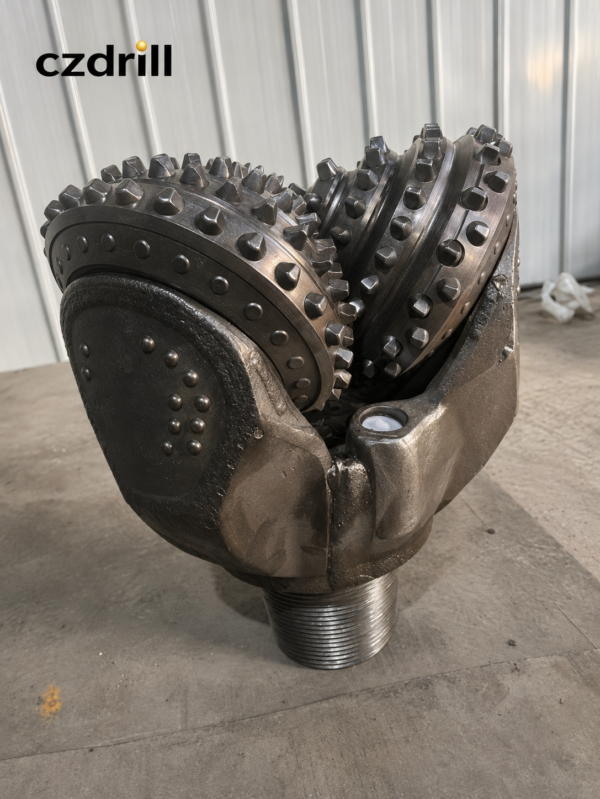
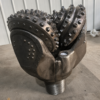
17 and a Half Inch IADC 537G Tricone Bit
17 1/2″ (444.5 mm) IADC 537G Tricone Drill Bit | TCI Sealed Bearing
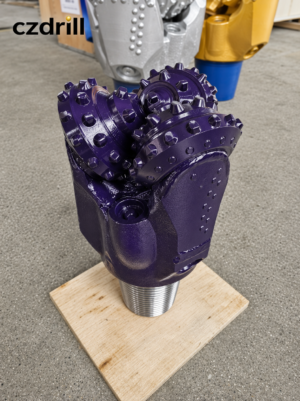
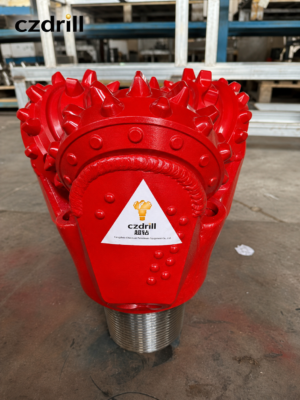
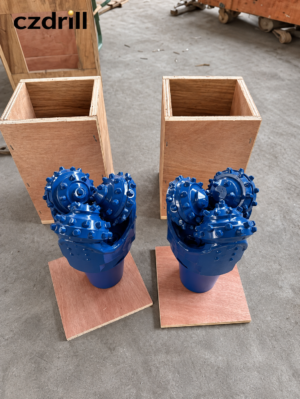
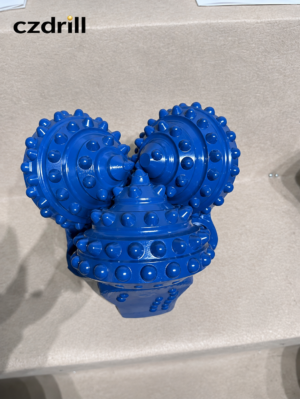
This 17 1/2 inch (444.5 mm) IADC 537G tricone drill bit is designed for soft to medium-hard formations with abrasive interbeds. High-strength tungsten carbide inserts deliver excellent wear resistance and impact toughness, outperforming steel-tooth bits in abrasive rock. The sealed journal bearing (elastomer or metal-to-metal seal optional) reduces bearing wear and supports longer single runs, while G-type gauge protection stabilizes the borehole diameter and reduces reaming. With high load-bearing capacity, this extra-large-diameter bit suits large rotary drilling rigs, and mud circulation passages and nozzles provide effective cooling and cuttings removal. API compliant, with API REG thread available. IADC code can be customized.
Applications: large-diameter water well drilling, oil and gas drilling, geological exploration, large-size pile foundations, mine drilling and large-dimension trenchless pilot hole construction.
17 1/2 Inch IADC 537G Tricone Bit Technical Specifications
We engineer the 17 1/2 inch IADC 537G tricone bit to tackle abrasive, medium-hard formations where bearing failure and gauge wear shut down drilling operations prematurely. Built for large-diameter drilling, this 444.5 mm TCI roller cone bit delivers structural stability, steady torque response, and maximum bottom-hole cleaning efficiency.
| Parameter | Specification |
|---|---|
| Bit Diameter | 17 1/2 in (444.5 mm) |
| IADC Classification | 537G |
| Connection Type | 7 5/8″ API Regular Pin |
| Bearing Type | Sealed Journal Bearing (Friction Bearing) |
| Cutting Structure | Tungsten Carbide Inserts (TCI) |
| Seal Type | High-Temperature HNBR O-Ring |
| Gauge Row Feature | Enhanced Carbide Protection (G-Spec) |
| Hydraulic Configuration | 3 Interchangeable Jet Nozzles |
Key Dimensional Specs and API 7 5/8 Regular Pin Connection
Our 17 1/2″ IADC 537G tricone bit utilizes an industry-standard 7 5/8 API regular pin tricone bit connection. This threading guarantees precise torque make-up and structural rigidity under heavy dynamic loads. The shoulder-to-pin alignment prevents downhole connection washouts, micro-fracturing, and pin shoulder deformation during aggressive drilling runs.
Cutting Structure Metallurgy with Tungsten Carbide Inserts (TCI)
We formulate the cutting structure for high compressive strength formations:
Tungsten Carbide Insert (TCI) Grades: Proprietary grade inserts combine high impact strength with wear resistance to prevent tooth breakage.
Insert Geometries: Inner rows use optimized conical and chisel inserts that crush rock through balanced chipping and gouging action.
Heel and Gauge Protection: Outer rows feature flat-topped and spherical wear-resistant inserts that hold true hole gauge in abrasive strata.
Sealed Journal Friction Bearing and High-Temp HNBR O-Ring Seals
Bearing blowouts destroy bottom-hole assemblies. We eliminate that risk by integrating a precision-machined sealed bearing tricone bit architecture:
Sealed Journal Bearing: Solid friction-bearing surfaces eliminate roller pinch points, dispersing extreme radial forces across a wide contact surface.
Silver-Plated Bushings: Anti-galling silver inlays reduce frictional heat build-up under high weight-on-bit (WOB) loads.
HNBR Elastomeric Seals: Heat-stabilized, highly saturated nitrile seals resist thermal degradation, swelling, and abrasive drilling mud ingress.
Nozzle Setup and Fluid Hydraulics
Bottom-hole chip regrinding robs your bit of rate of penetration (ROP). We configure this 17 1/2 inch sealed journal bearing bit with a three-jet nozzle delivery system:
Interchangeable Jet Nozzles: Threaded nozzle sleeves accommodate field-swappable orifices to dial in exact pressure drop and total flow area (TFA).
Targeted Flow Dynamics: Direct fluid streams clean insert tips before striking bottom, sweeping away cuttings instantly to prevent bit balling in sticky intervals.
Downhole Engineering Architecture and Gauge Protection
The structural build of our 17 1/2 inch IADC 537G tricone bit focuses on stabilizing torque, preserving hole diameter, and protecting critical bearing assemblies under heavy bit loads. When sizing tools with our procurement guide for tricone drill bits, matching the cutting structure and gauge security to formation abrasiveness ensures maximum footage per run.
Balanced Insert Layout for ROP Optimization
-
- Hybrid Cutting Action: We strategically position inner rows with chisel inserts for fast chipping action, while the middle and drive rows use heavy conical tungsten carbide inserts (TCI) to crush compressive rock without chipping teeth.
- Vibration Dampening: Unequal tooth pitch spacing breaks harmonic resonance patterns, eliminating tracking grooves and smoothing out downhole torque spikes.
- Controlled Intermesh: Cone geometries provide self-cleaning clearance between rows, ejecting sticky cuttings before they cause bit balling.
G-Feature Gauge Protection and Shirt-Tail Hardfacing
Running a large 17.5″ hole requires absolute gauge integrity to prevent undergauge drilling that wedges follow-up casing strings or reaming runs.
-
- Heel and Gauge Inserts: The “G” classification guarantees dedicated, flat-topped tungsten carbide compacts pressed flush into the heel row and gauge bevel.
- Shirt-Tail Hardfacing: We lay thick, multi-pass tungsten carbide hardfacing along the leading edge of the shirt-tail and lug surfaces, shielding the bearing cavity against continuous fluid erosion and abrasive cuttings wash.
- Diameter Preservation: The gauge row takes the scraping brunt against the wellbore wall, keeping the hole at a true 444.5 mm diameter throughout the entire bit run.
Pressure-Compensating Diaphragm Lubrication Reservoir
Bearing survival hinges on clean, pressurized lubrication. Our sealed journal system uses a built-in compensation system to handle harsh downhole conditions:
-
- Hydrostatic Equalization: A flexible, synthetic rubber diaphragm automatically equalizes the pressure between the internal grease reservoir and external downhole mud column, preventing pressure differentials that blow out bearing seals.
- Grease Delivery: Multi-directional channels route high-performance synthetic grease across journal pin friction surfaces and locking balls under high downhole temperatures.
- Debris Protection: A steel venting cap deflects solid particulates and high-velocity mud flow away from the relief valve, preventing solids contamination in the reservoir.
Target Formations and Applications for 17 1/2 Inch Bits
Running a 17 1/2 inch IADC 537G tricone bit comes down to matching the cutting structure with the rock profile. When drilling big-hole intervals, your main hazards are premature insert breakage and gauge wear. We design our IADC 537 rock bit to stay in the hole longer across medium to medium-hard lithologies where milling tooth bits fail and standard PDC bits risk impact damage from hard stringers.
Drilling High Compressive Strength Formations
This 444.5 mm TCI roller cone bit targets tough, abrasive, and interbedded intervals. The tungsten carbide insert design crushes rock effectively under high weight without catastrophic tooth chipping:
-
- Dense Limestones & Dolomites: Handles high compressive strengths where crushing action outperforms shearing.
- Abrasive Sandstones & Calcite Stringers: Resists tooth wear while maintaining penetration rates.
- Hard, Consolidated Shales: Prevents cone skidding and uneven wear across the cutting profile.
Surface and Intermediate Casing Sections
Surface hole drilling in oil and gas operations demands full-gauge integrity from spud to casing depth. We run the 17 1/2 inch sealed journal bearing bit in:
-
- Top-Hole Surface Runs: Drills out conductor casing and opens heavy surface holes for large conductor and surface casing strings.
- Intermediate Sections: Powers through variable lithology before setting intermediate pipe, reducing round trips for bit changes.
Geothermal and Large-Diameter Water Wells
Beyond standard oilfield runs, large-diameter drilling projects require severe-duty bits that handle heat and volume:
-
- Deep Geothermal Wells: Withstands elevated bottom-hole temperatures and fractured volcanic or crystalline strata.
- Tricone Bit for Water Well Drilling: Serves high-capacity municipal and industrial water wells where maintaining a true 17.5-inch gauge over long single-run footage is non-negotiable.
For rig operators optimizing fleet supply, our team details these selection criteria in the B2B guide to sourcing industrial drilling bits to match ground conditions with the right bit classification.
Operational Drilling Parameters: WOB, RPM, and Hydraulics
Getting the most footage out of a 17 1/2 inch IADC 537G tricone bit comes down to balancing weight, rotation, and fluid energy. Pushing past design limits overheats seals, while under-loading leads to insert bounce and broken carbide teeth. We engineer our bits to handle aggressive drilling while keeping the bearing structure completely protected.
| Operating Parameter | Recommended Working Range | Maximum Field Limit | Primary Failure Risk if Exceeded |
|---|---|---|---|
| Weight on Bit (WOB) | 35,000 – 65,000 lbs (155 – 290 kN) | 75,000 lbs (335 kN) | Journal bearing deformation, cracked inserts |
| Rotary Speed (RPM) | 60 – 110 RPM | 130 RPM | Seal degradation, thermal degradation |
| Flow Rate (GPM) | 800 – 1,100 GPM (3,000 – 4,150 LPM) | 1,250 GPM | Bottom-hole erosion, hydraulic washing |
| Nozzle Velocity | 280 – 420 ft/s (85 – 128 m/s) | 450 ft/s | Premature cone erosion and matrix loss |
Recommended Weight on Bit (WOB) Limits
Running a 17.5″ hole requires sufficient load to let the tungsten carbide inserts crush hard, compact rock rather than simply grind against it. For this 444.5 mm TCI roller cone bit:
-
- Break-in Period: Run 15,000 to 20,000 lbs for the first 30 to 45 minutes to establish a stable bottom-hole pattern before reaching standard drilling weight.
- Standard Operating Weight: Maintain between 2,000 and 3,700 lbs per inch of bit diameter (35,000 to 65,000 lbs total). In formations where a chisel profile PDC drill bit suffers cutter fracture due to high compressive strength or interbedded stringers, this load range generates steady, reliable penetration.
- Vibration Management: Back off weight immediately if severe axial chatter or drill-string resonance occurs to prevent insert micro-fractures.
Optimal Rotary Table Speed (RPM) Range
Our sealed journal bearing tricone bit is designed to deliver sustained cutting action at low to medium rotary speeds:
-
- Rotary Table / Top Drive: Keep speeds strictly between 60 and 110 RPM.
- Mud Motor Applications: Keep composite RPM (motor output plus rotary table) under 140 RPM. High rotational speeds generate extreme centrifugal forces and friction heat across the elastomer O-ring seals, shortening overall bit hours downhole.
- Uniform Torque: Watch the top-drive amp draw. Fluctuating torque usually indicates cone stalling or junk downhole rather than normal rock shear.
Hydraulic Flow Rates and Jet Velocity Calculations
Clearing heavy cuttings out of a massive 17 1/2 inch hole requires high hydraulic power to prevent re-drilling and cone packing:
-
- Annular Velocity: Maintain an annular velocity of 120 to 180 ft/min in the open hole to lift large rock cuttings up through the surface casing without settling.
- Jet Nozzle Sizing: Run three interchangeable nozzles to balance pressure loss across the bit body. Aim for a total nozzle velocity between 300 and 400 ft/s.
- Hydraulic Impact Force (HIF): Calculate your flow to maximize bottom-hole cleaning energy. Ensure bottom nozzles spray directly across the cone steel and insert rows to flush away cuttings immediately upon generation.
Manufacturing Standards and Quality Assurance
Forged Alloy Steel Metallurgy and Heat Treatment
Every 17 1/2 inch IADC 537G tricone bit starts with premium forged alloy steel legs to withstand extreme dynamic loading downhole. We utilize specialized multi-stage heat treatment cycles to optimize the core toughness while carburizing bearing journals and friction surfaces.
-
- Cone and Leg Forgings: High-strength structural alloy steel designed to eliminate structural cracking under high impact.
- Surface Hardening: Case-hardened journal bearing pins resist galling, thermal breakdown, and spalling.
- Carbide Retention: Precision-machined insert pockets ensure an exact interference fit, preventing lost tungsten carbide inserts (TCI) in medium-hard drilling.
API Spec 7-1 and ISO 9001 Compliance
We build our large-diameter bits under strict ISO 9001 manufacturing controls to meet international drilling standards. All connection threads, shoulder dimensions, and bevels fully comply with API Spec 7-1 requirements.
Whether you run this setup or step down formation hardness to an IADC 517 TCI tricone drill bit, our production lines follow unified quality standards. Every manufactured IADC 537 TCI tricone drill bit carries full heat-lot traceability stamped onto the shank, linking the finished tool directly to its raw material heat certs.
Non-Destructive Testing (NDT) and Weld Inspection
To prevent catastrophic downhole separations, cone drop, or premature seal failure, every 17.5″ bit goes through rigorous NDT protocols before crate packing:
-
- Magnetic Particle Inspection (MPI): Performed across 100% of leg assembly welds and pin threads to verify zero surface fractures.
- Ultrasonic Testing (UT): Deep metallurgical scans on bearing journals and critical stress sections of the bit body.
- Precision Air and Pressure Testing: Full submerged pneumatic testing of the elastomer seal assembly and grease reservoir to guarantee seal integrity under differential hydrostatic pressure.
- Dimensional Verification: Hard gauge ring checks ensure outer diameter limits meet strict API tolerances, keeping your borehole true to gauge.
Procurement and Rig Sizing Checklist for the 17 1/2 Inch IADC 537G Tricone Bit
Getting the right bit setup on the rig floor prevents premature trips, gauge wear, and wasted rig time. When ordering a 17 1/2 inch IADC 537G tricone bit, matching your nozzle configuration, bit sub connection, and mud system delivery to downhole demands is critical before the bit ships to your location.
Custom Jet Nozzle Sizing and Extended Shroud Options
We supply each 17.5″ IADC 537G tricone bit with customizable nozzle profiles to optimize hydraulic horsepower at the bottom of the hole. Large-diameter hole sections demand substantial fluid volume to clear heavy cuttings and prevent bit balling in interbedded intervals.
-
- Three-Jet Standard Layout: Interchangeable tungsten carbide nozzles available in standard sizes from 14/32″ to 28/32″ to tune your hydraulic impact force and flow velocity.
- Extended Jet Shrouds: Directs mud discharge closer to the bottom of the hole, scrubbing cuttings away from the tungsten carbide inserts immediately upon formation fracture.
- Center Jet Option: Available for runs where cone-cleaning hydraulics are required to eliminate mud packing between cone grooves in sticky shale stringers.
Rig-Floor Data Checklist for Your RFQ
To ensure the 444.5 mm TCI roller cone bit meets your exact rig-operating envelope, compile the following operational parameters before submitting your request for quotation:
| Operational Parameter | Required Specification | Purpose / Field Impact |
|---|---|---|
| Bit Size & IADC | 17 1/2″ (444.5 mm), IADC 537G | Confirms cutting structure and sealed journal bearing design |
| Connection Type | API 7 5/8 Regular Pin | Verifies proper crossover sub match and make-up torque values |
| Mud Flow Capacity | Target GPM & Standpipe Pressure limits | Determines optimal nozzle sizing and total flow area (TFA) |
| Drilling Fluid Type | Water-based, oil-based, or polymer mud | Guides elastomeric seal selection and bearing grease matching |
| Lithology / Target Zone | Compressive strength & abrasive content | Validates gauge protection layout and insert exposure |
| Drive System | Rotary table vs. downhole mud motor | Determines allowable rotary speed (RPM) and weight on bit (WOB) |
Our engineering processes align with precision core components geometric accuracy to guarantee that thread connections and bearing journals mate precisely with standard field subs without thread galling or alignment issues.
Export Packaging and Heavy-Duty Shipping Specs
Handling a 17 1/2 inch sealed journal bearing bit requires robust field transport packaging to avoid impact damage to the cutting structure, gauge inserts, or pin threads before run-in.
-
- Thread Protection: Heavy-duty composite or pressed-steel API 7 5/8 Reg thread protectors torqued onto the pin to protect sealing faces and threads during transit.
- Bit Crating: Secured inside steel-banded, reinforced wooden crates or heavy-duty steel transit containers fitted with cone cradles to isolate the cutting structure.
- Corrosion Inhibitors: High-grade industrial rust-preventative coating applied to the entire forged bit body and pin face, sealed in vapor-barrier packaging for ocean freight and harsh rig-site storage conditions.
- Shipping Weights and Dimensions: Net bit weights and crated dimensions clearly stenciled alongside serial and heat numbers for rapid rig-site inventory identification.
Frequently Asked Questions About 17 1/2 Inch IADC 537G Tricone Bits
What does the IADC 537G classification mean?
The IADC 537G code defines the mechanical design and formation match for this 17 1/2 inch IADC 537G tricone bit:
5 (Series): Tungsten carbide insert (TCI) cutting structure designed for soft-to-medium formations with high compressive strength.
3 (Type): Harder formation cutting structure featuring durable chisel or conical insert layouts.
7 (Bearing): Sealed journal friction bearing with complete gauge protection.
G (Additional Feature): Extra heel-row and gauge-row carbide protection to resist abrasive wear.
If you hit transitions into harder, abrasive rock, stepping up to an IADC 637 TCI tricone drill bit gives you the insert density needed for higher compressive strengths.
When should I run a journal bearing instead of a roller bearing?
Choose a sealed bearing tricone bit with journal friction bearings whenever you plan long, continuous rotary drilling runs or high bit-weight cycles.
-
- Roller Bearings: Best for shallower holes, faster rotary speeds, or low-cost surface drilling where bits get pulled early.
- Journal Bearings: Essential for deep intermediate casing sections, geothermal runs, and critical hole-opening passes where bearing blowout means an expensive, unplanned trip.
Our journal bearings distribute mechanical load across a wider solid contact surface, eliminating the rolling elements that can spall and lock up under intense torque.
How do I calculate the right WOB for a 17 1/2 inch TCI bit?
To calculate proper Weight on Bit (WOB), balance bit diameter with formation hardness.
-
- General Rule: Plan for 3,000 to 5,000 lbs per inch of bit diameter in medium-hard rock.
- Target Load: For a 444.5 mm IADC 537G drill bit, start drilling around 45,000 to 70,000 lbs (20 to 32 metric tons).
- Field Adjustment: Start low at the shoe or formation top, monitor ROP and torque smoothness, then stack weight gradually until cutting efficiency peaks without stalling your mud motor or rotary table.
Can this bit handle abrasive sandstone formations without gauge loss?
Yes. The “G” designation means the outer cone profile carries dedicated tungsten carbide gauge inserts and heavy hardfacing along the shirt-tail.
-
- The outer gauge inserts actively ream the borehole wall to full 17.5-inch diameter.
- The hardfaced shirt-tail blocks abrasive sandstone cuttings from grinding into the seal cavity.
- As long as you maintain proper mud flow and nozzle velocity to clear cuttings off the bottom, this cutting structure keeps full gauge from surface spud to casing depth.
Related Sources
- https://www.varel.com/products/roller-cone-bits/
- https://www.halliburton.com/en/products/roller-cone-drill-bits
- https://www.api.org/standards-and-publications/api-specifications-and-standards/drilling-and-production/spec-7-1
- https://www.iadc.org/iadc-committees/iadc-drilling-engineers-committee/iadc-roller-cone-dull-grading-chart/