
WhatsApp:+86 19933284353

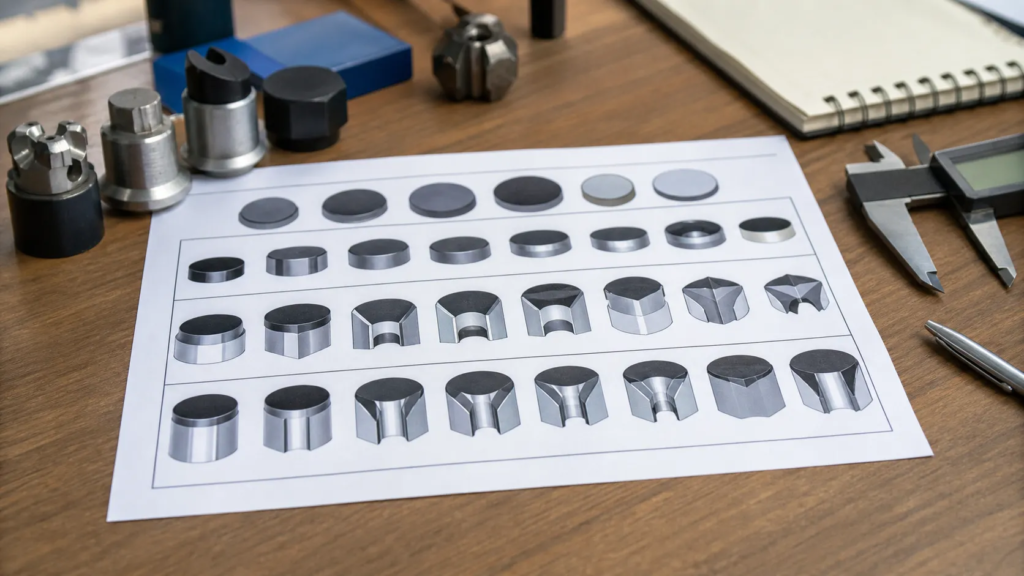
What is a PDC Cutter and How Does It Work?
Definition of Polycrystalline Diamond Compact (PDC) Cutters
Polycrystalline Diamond Compact (PDC) cutters are synthetic cutting tools made by bonding multiple layers of diamond crystals onto a tungsten carbide substrate. This composite material combines extreme hardness and toughness, making PDC cutters ideal for demanding drilling applications. Their robust diamond layer provides exceptional wear resistance, while the carbide base offers strength and impact durability.
The Manufacturing Process and Core Components
Manufacturing PDC cutters involves high-pressure, high-temperature (HPHT) synthesis to fuse diamond grit into a dense, polycrystalline diamond layer. This diamond layer is then permanently bonded to a tungsten carbide substrate, forming a compact unit. Precision machining polishes the cutter’s surface and shapes the cutting edge to exact geometric specifications. Key components include the diamond layer, carbide substrate, and engineered cutting edges tailored for various drilling conditions.
The Working Principle in Drilling Operations
In drilling operations, PDC cutters use their ultra-hard diamond surfaces to shear and crush rock formations as the drill bit rotates. The cutter’s sharp edges penetrate rock, while the tungsten carbide backing supports impact and abrasion loads. This combination enables consistent rock cutting with high rate of penetration (ROP) and enhanced wear resistance, resulting in efficient and cost-effective drilling performance across a range of geological conditions.
Key Benefits and Performance Advantages of PDC Cutters
Superior Hardness and Wear Resistance
PDC cutters are known for their exceptional hardness, thanks to the polycrystalline diamond layer bonded to a tungsten carbide substrate. This diamond grit surface withstands intense abrasion, ensuring prolonged cutter life even in the toughest rock formations. Their wear resistance reduces bit failure and downtime, making them ideal for demanding drilling environments.
| Benefit | Explanation |
|---|---|
| High diamond hardness | Resists abrasive wear and surface damage |
| Strong carbide substrate | Provides structural support and toughness |
| Extended service life | Lowers frequency of cutter replacements |
High Thermal Stability Under Stress
The unique construction of PDC cutters offers excellent thermal stability during high-temperature drilling. Unlike conventional bits, the diamond layer maintains its integrity under sustained heat and friction, minimizing thermal degradation. This is critical for maintaining cutter performance in deep wells where temperature spikes are common.
| Feature | Impact |
|---|---|
| Heat-resistant diamond layer | Prevents loss of hardness at high temps |
| Carbide substrate backing | Dissipates heat efficiently |
| Stable cutter geometry | Maintains cutting efficiency under stress |
Improved Rate of Penetration (ROP) and Cost-Effectiveness
By combining superior hardness, wear resistance, and thermal stability, PDC cutters dramatically boost the rate of penetration (ROP). Operators benefit from faster drilling cycles and lower overall operational costs. Additionally, since CZDRILL supplies full-chain manufacturing and professional refurbishment, clients enjoy up to 30% cost savings through cutter replacement and secondary reuse, maximizing drilling ROI.
| Advantage | Result |
|---|---|
| Faster ROP | Reduced drilling time and expenses |
| Durable cutters | Minimized downtime and maintenance |
| Cost-saving refurbishment | Significant procurement cost reduction |
These performance advantages make PDC cutters a reliable choice for drilling across oil and gas, mining, and trenchless applications, ensuring long-term efficiency and effectiveness. For durable steel body PDC bits designed to maximize ROP, consider options like our CZ-F1M Standard Steel Body PDC Bit or CZ-D1 Standard Steel Body PDC Bit.
Main Types of PDC Cutter Shapes
Standard Flat PDC Cutters
The most common PDC cutter shape, flat cutters provide a consistent, uniform cutting surface ideal for smooth, efficient rock shearing. Their wide, planar design delivers excellent wear resistance and longevity, making them a reliable choice for a variety of drilling conditions. Standard flat cutters are extensively used in steel body PDC bits like the CZ-F1M overlay welded bit to enhance durability and penetration rates.
Conical Diamond Cutters
Conical cutters feature a pointed, cone-shaped diamond surface allowing for aggressive rock fracturing and penetration in harder formations. Their geometry concentrates force on a smaller area, improving impact efficiency while maintaining good wear resistance. These cutters are favored when high ROP is needed without compromising bit life.
Axe and Ridge PDC Cutters
Axe and ridge cutters incorporate a sharp edge or ridge on the cutting surface, designed to improve rock breaking and gouging effects. This shape creates more efficient chip removal and reduces the cutter’s exposure to abrasive wear by slicing through formations rather than grinding. These cutters excel in tough, interbedded rock layers where enhanced impact resistance is crucial.
Dome and Concave Non-Planar Cutters
Dome and concave cutters feature curved, non-flat surfaces, allowing better distribution of stress and improved cutter stability under complex loads. Dome shapes offer superior durability when drilling in abrasive or highly fractured formations, while concave cutters facilitate controlled cutting action in softer rock layers. These advanced geometries are often integrated through specialized OEM engineering to tailor cutter performance precisely to challenging geological conditions.
These diverse PDC cutter shapes allow customization of bits to meet the specific demands of different drilling environments and rock types. Combining the right cutter geometry with tailored layouts drives optimal drilling efficiency and cost savings.
PDC Cutter Specifications and Geometric Variations
Standard Diameter and Thickness Sizes
PDC cutters come in a range of standard diameters and thicknesses tailored for various drilling needs. Typical diameters vary from 8 mm up to 34 mm or more, allowing compatibility with different bit designs and formations. Thickness usually ranges between 2 mm and 6 mm to balance durability and cutting efficiency. Selecting the right diameter and thickness ensures optimal wear life and penetration rate while maintaining structural integrity during high-impact drilling.
| Specification | Typical Range |
|---|---|
| Diameter | 8 mm – 34 mm |
| Thickness | 2 mm – 6 mm |
Chamfer Angles and Edge Geometry
Chamfer angles and cutting edge geometry play a vital role in the cutter’s performance, affecting wear resistance and penetration ability. Common chamfer angles range from 20° to 45°, designed to protect the edges from chipping and improve durability. Edge shapes vary from flat to slightly rounded or beveled, depending on formation hardness and bit type. Precise geometric control during manufacturing enhances cutter longevity and drilling efficiency by reducing cutter wear under stress.
Quality Grades and Cutting Edge Innovations
PDC cutters are manufactured in multiple quality grades based on diamond quality, carbide substrate strength, and bonding techniques. Higher-grade cutters offer improved abrasion resistance and thermal stability, enabling reliable operation in tougher formations. Innovations in cutting edge technology include enhanced diamond grit distribution and advanced bonding methods which maximize cutter life and maintain sharpness for extended drilling cycles. These improvements contribute to increased ROP and greater cost-effectiveness throughout the drilling process.
For details on the precision and quality control behind these specifications, exploring precision core component geometric accuracy offers valuable insight into CNC machining and quality standards at CZDRILL.
Industrial Applications of Different PDC Cutter Types
Oil and Gas Exploration Drilling
PDC cutters are essential in oil and gas exploration for their durability and efficiency in harsh subsurface conditions. Their wear resistance and superior thermal stability enable high rate of penetration (ROP) through various rock formations. Customized cutter layouts optimize performance in soft to hard rocks, improving bit life and reducing drilling costs. Steel body PDC bits incorporating premium cutters like the GT series are often preferred for tougher formations, whereas matrix body bits offer advantages in softer, abrasive layers. These options support sustained drilling operations in onshore and offshore rigs.
Mining and Geothermal Drilling
In mining and geothermal applications, PDC cutters provide the reliability needed to handle extreme abrasion and elevated temperatures. The robust cutting edges maintain sharpness during extended runs in hard rock, enabling faster rock fragmentation and efficient energy use. For geothermal wells, the heat-resistant properties of PDC cutters allow continued performance where conventional bits fail. Combining different cutter shapes and sizes enables tailored bit designs for variable geological challenges common in mining and geothermal drilling sites.
Integration into Matrix Body vs. Steel Body Bits
PDC cutter types integrate differently depending on the bit body:
| Feature | Matrix Body Bits | Steel Body Bits |
|---|---|---|
| Cutter Mounting | Typically brazed or adhesive-bonded | Mechanically locked in place |
| Application Focus | Soft to medium formations | Medium to hard, abrasive formations |
| Durability | Better heat dissipation, less fatigue | Higher impact resistance |
| Maintenance & Repair | Replacement limited, often discard after wear | Supports closed-loop refurbishment and cutter replacement |
| Common Use Cases | Directional drilling, shale gas | Conventional oil wells, hard rock drilling |
Selecting the right cutter and body integration maximizes ROP and wear resistance while minimizing costs. CZDRILL’s custom OEM engineering ensures optimal cutter layouts tailored to specific formations, whether for steel or matrix body bits. For insights on sourcing and design, explore the B2B guide to sourcing industrial drilling bits.
How to Select the Right PDC Cutter Type
Matching Cutter Shapes to Rock Formation Hardness
Choosing the correct PDC cutter shape begins with understanding the hardness and abrasiveness of the rock formation. Flat cutters generally perform best in softer to medium formations, providing optimal wear resistance and efficient cutting. For harder, more abrasive formations, conical or dome-shaped cutters offer better durability and impact resistance. Axe and ridge cutters provide enhanced rock-breaking ability in challenging strata. Selecting the proper cutter profile tailored to the formation’s characteristics directly influences drilling efficiency and tool life.
Balancing Impact Resistance and Abrasion Resistance
An effective PDC cutter balances impact resistance with abrasion resistance. Softer formations demand cutters with excellent abrasion resistance to reduce wear, whereas harder, fractured rocks require cutters designed to withstand shock and toughness from impacts. Manufacturers like CZDRILL provide engineered cutter layouts that optimize this balance, helping to avoid premature cutter failure and maximize rate of penetration (ROP). Employing cutters with advanced carbide substrates and precision chamfering further enhances performance against these competing stresses.
Evaluating Advanced Technologies and Performance Metrics
Modern PDC cutters integrate advancements in manufacturing, such as premium GT series cutters and custom CNC-machined layouts, to maximize drilling performance. Performance metrics like ROP, cutter wear rate, and thermal stability should guide cutter selection. Additionally, closed-loop refurbishment and cutter replacement services reduce lifecycle costs while maintaining tool effectiveness. Leveraging such engineering innovations ensures that the chosen PDC cutters align with project demands, delivering high durability and cost-efficient drilling outcomes. For specialized drilling needs, consultation on tailored cutter configurations is a key advantage offered through direct manufacturing and repair services.
Explore tailored engineering and cutter replacement services designed to enhance drilling in diverse formations through CZDRILL’s full-chain manufacturing and refurbishment solutions. For more information, visit our professional services page.