
WhatsApp:+86 19933284353

The Materials Science Behind Premium PDC Bits
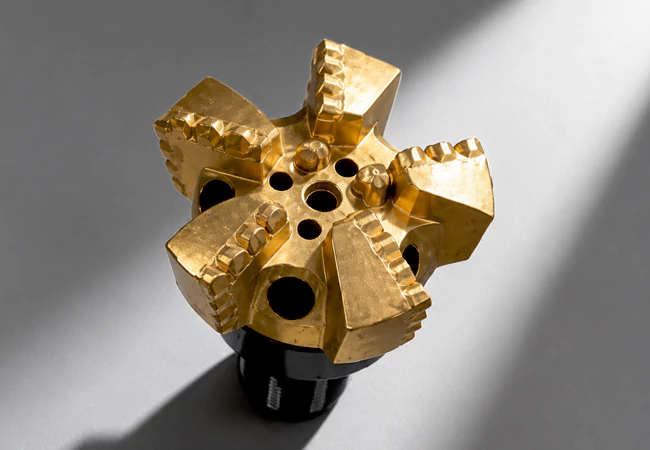
Under extreme downhole conditions characterized by high pressure, intense torque, and severe abrasive wear, a PDC (Polycrystalline Diamond Compact) bit’s ability to sustain a high Rate of Penetration (ROP) depends entirely on its structural metallurgy and hardfacing technologies.
Core Material Technical Benchmarks
1. Premium Alloy Steel Substrates (4145H Steel)
The core bodies of premium steel-body PDC bits and hole reamers are machined out of quenched-and-tempered 4145H high-strength alloy steel. This grade provides the optimal yield strength and impact toughness required to withstand massive torsional forces and sudden formation impacts without risking blade breakage or pin shearing.
2. Ultra-Hard Tungsten Carbide Hardfacing (HRC 58-65)
To combat highly abrasive strata (such as quartz sandstone and flint interbeds), a 2.0–3.5 mm spherical tungsten carbide overlay is welded onto the blade faces and gauge pads. This nickel-based self-fluxing alloy reaches a hardness of HRC 58–65, providing a bulletproof shield over the high-toughness steel core.
[ 4145H Alloy Steel Core: High Torsional & Impact Toughness ]
                              ↓ (Surface Fusion)
[ 2.0-3.5mm Tungsten Carbide Overlay: HRC 58-65 Wear Shield ]
FAQ: Metallurgy and Bit Wear Protection
Q1: How do I know if my drill site requires an “overlay welded” steel body PDC bit? A: If the geological strata contain more than 30% quartz sandstone, chert layers, or abrasive gravel, standard steel bits will wear out rapidly due to mud erosion and rock friction, causing under-gauge holes or lost cutters. An overlay welded bit with an HRC 58-65 surface hardness is essential to prolong tool life in these conditions.
Q2: What specific performance benefits does the 4145H alloy steel bring after heat treatment? A: 4145H is the industry-standard steel for high-stress drilling tools. The quenching and tempering process alters its microstructure to maximize fatigue resistance. This ensures that the root of the bit blades and the thread connections do not experience catastrophic failure under severe downhole vibration or structural bending.
Q3: How do different PDC cutter diameters (e.g., 13mm vs. 16mm or 19mm) affect cutting performance? A: The first two digits of a cutter specification (like 1308 or 1613) denote the diameter in millimeters. Large cutters (16mm, 19mm) create deeper rock engagement and are highly aggressive in soft-to-medium formations, yielding excellent ROP. Smaller cutters (13mm) have shallower engagement but allow for higher cutter density, offering superior impact resistance in harder, interbedded formations.