
WhatsApp:+86 19933284353

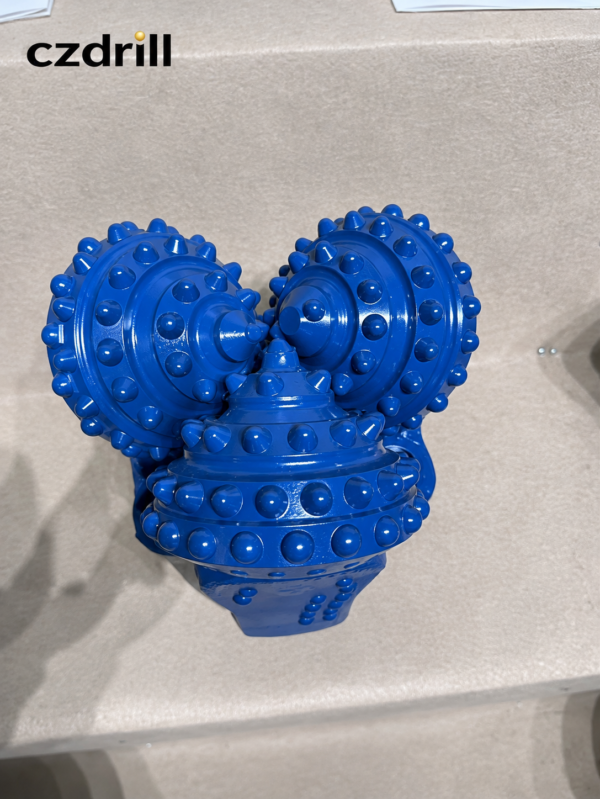
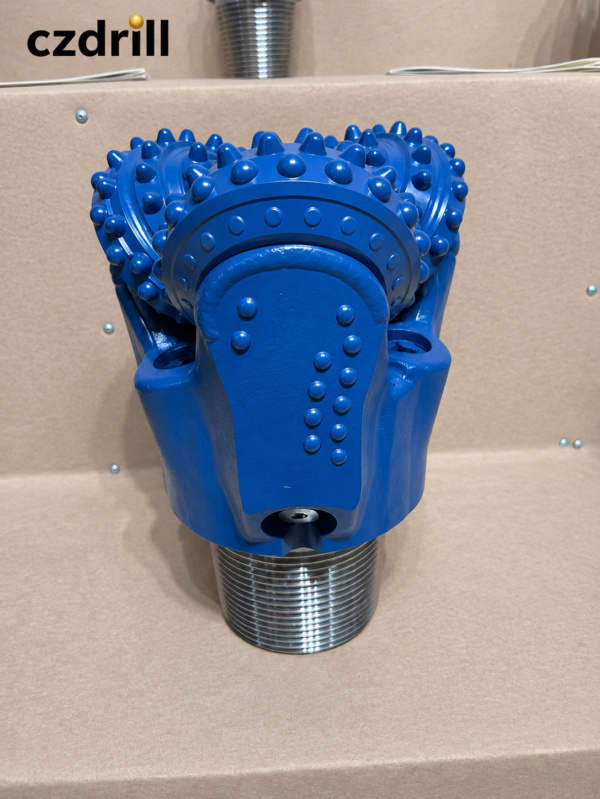
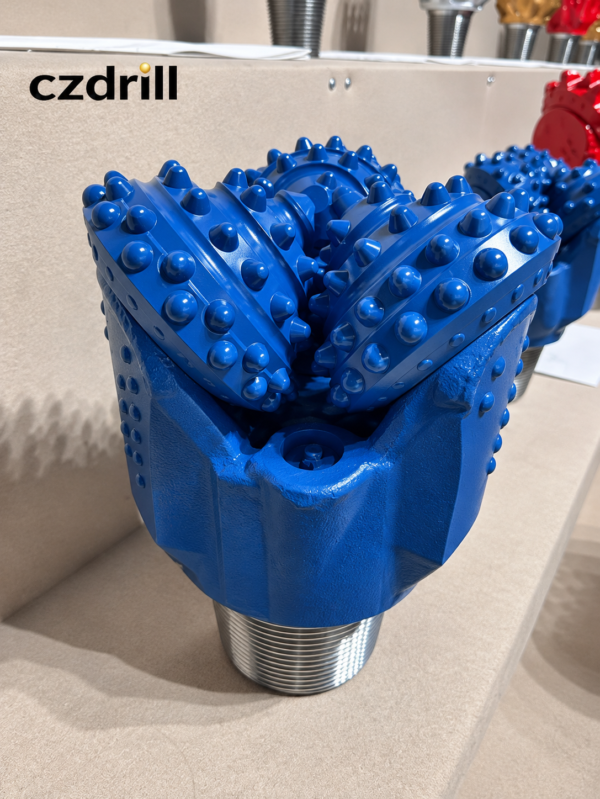
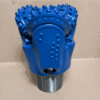
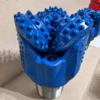
9‑1/2″Inch Tricone Bit IADC 637G for Hard Rock
9 1/2″ (241.3 mm) IADC 637G Tricone Drill Bit | TCI Sealed Bearing
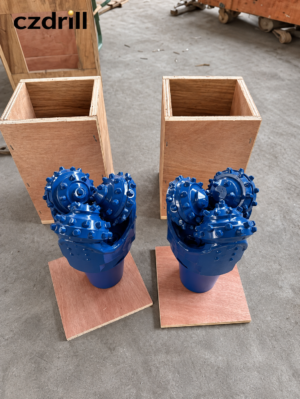
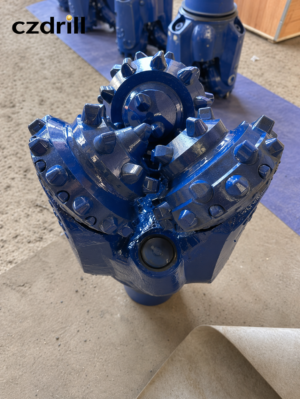
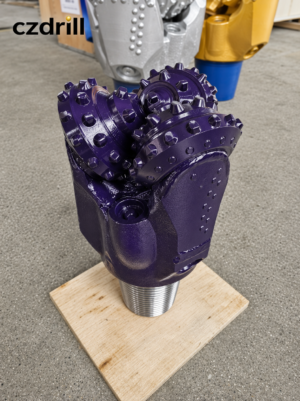
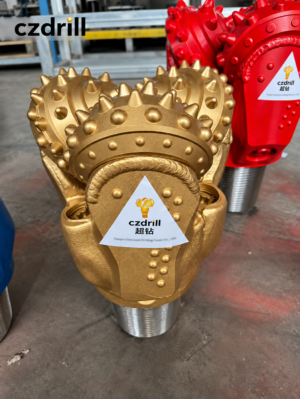
This 9 1/2 inch (241.3 mm) IADC 637G tricone drill bit is built for medium-hard to hard rock formations with high compressive strength. High-strength tungsten carbide inserts deliver good impact resistance and wear resistance, with powerful rock-breaking capacity in abrasive, high-hardness strata. The sealed journal bearing (elastomer or metal-to-metal seal optional) reduces bearing wear and supports longer single runs, while G-type gauge protection stabilizes the borehole diameter and reduces reaming. With high load-bearing capacity, it suits medium-to-large rotary drilling rigs, and mud circulation passages and nozzles provide effective cooling and cuttings removal. API compliant, with API REG thread available. IADC code can be customized.
Applications: water well drilling, geothermal drilling, geological exploration, mining engineering, oil and gas drilling and large-diameter hard-rock projects.
What Is a 9 1/2 Inch (241.3 mm) Tricone Drill Bit?
A 9 1/2 inch tricone bit (metric equivalent: 241.3 mm tricone bit) is a heavy-duty rotary drilling tool engineered to break down subterranean formations efficiently. Fitted with three interlocking, rolling cones that rotate on precision-machined bearing journals, this bit fractures, crushes, and chips away rock as it advances downhole under rotational force and downward weight.
Core Design Features
- Three-Cone Geometry: Delivers balanced cutting dynamics and reduced hole deviation by distributing weight evenly across three independent roller cones.
- Standard 241.3 mm Bore Diameter: Provides a critical intermediate hole size widely deployed for surface casing runs, water extraction, and energy drilling programs.
- High-Efficiency Rock Crushing: Combines compressive crushing and shearing actions to optimize rate of penetration (ROP) across variable strata.
- Universal Rig Compatibility: Built to operate smoothly with both direct rotary table setups and high-torque positive displacement downhole motors.
Understanding the IADC 637G Code
The IADC classification system eliminates guesswork when selecting the right roller cone tool. For our 9 1/2 inch tricone bit, the IADC 637 tricone bit classification specifies the exact cutting structure, bearing design, and protection level required for high-load applications:
- First Digit (6): Indicates a TCI tricone drill bit engineered with tungsten carbide inserts for hard, abrasive formations. While an IADC 537 TCI tricone drill bit or an IADC 517 TCI tricone drill bit targets medium-to-hard rock, a series 6 bit is designed for significantly tougher ground.
- Second Digit (3): Classifies the hardness grade within the series, meaning this profile delivers maximum crushing capability against high compressive strength strata.
- Third Digit (7): Denotes a sealed friction (journal) bearing with advanced gauge protection, preventing bearing contamination and premature wear during deep drilling runs.
- Suffix (G): Specifies extra gauge row protection to preserve hole diameter in abrasive environments.
Choosing this configuration gives you an optimized tricone bit for hard rock drilling that maintains stability and penetration rates under demanding downhole conditions.
Key Specifications
Our 9 1/2 inch tricone bit delivers steady penetration rates and extended downhole life across demanding rock strata. We build each 241.3 mm tricone bit to strict industry standards to ensure seamless rig compatibility and dependable structural integrity.
| Parameter | Specification Details |
|---|---|
| Nominal Diameter | 9 1/2 inch (241.3 mm) |
| IADC Classification | 637 / 637G |
| Cutting Structure | Tungsten Carbide Inserts (TCI) |
| Bearing System | Rubber-sealed journal bearing |
| Pin Connection | 6 5/8″ API Regular |
| Gauge Protection | Carbide inserts on gauge row and heel |
| Hydraulics | 3 interchangeable jet fluid nozzles |
Review our documented drilling case studies to see the operational benchmarks and run parameters achieved by these bits in heavy drilling operations.
Why Choose a TCI Tricone Drill Bit?
When drilling through abrasive, medium-to-hard rock formations, choosing a TCI tricone drill bit directly impacts your rate of penetration (ROP) and overall drilling cost per foot. Unlike standard milled-tooth designs, Tungsten Carbide Insert (TCI) technology uses ultra-durable carbide compacts pressed into the alloy steel cones. This makes a 9 1/2 inch tricone bit significantly more resistant to wear, impact, and high-stress downhole conditions.
For operators tackling abrasive sandstone, limestone, or chert, deploying our IADC 637 TCI tricone drill bit ensures reliable crushing strength where standard bits dull quickly.
Performance Comparison: TCI vs. Steel Tooth
| Feature | Steel Tooth (Milled) Bit | TCI Tricone Drill Bit |
|---|---|---|
| Ideal Formations | Soft to medium-soft formations | Hard, abrasive, and interbedded rock |
| Cutting Structure | Milled steel teeth | High-grade tungsten carbide inserts |
| Wear Resistance | Moderate; subject to rapid erosion | Superior wear and chipping resistance |
| Bit Life Downhole | Shorter operational hours | Extended run times with minimal tripping |
| Cost Efficiency | Lower upfront cost, more trips | Higher durability, lower cost per foot |
Key Operational Advantages
- Reduced Tripping Time: Fewer bit changes mean major savings on rig time, as outlined in our procurement guide for tricone drill bits.
- Optimal Rock Fracturing: Strategically shaped inserts provide maximum impact energy to pulverize hard rock efficiently.
- Gauge Integrity: Carbide inserts along the cone flanks protect the hole diameter, keeping your wellbore perfectly in gauge from surface to target depth.
Sealed Bearing Technology Explained
In tough downhole conditions, the bearing package determines how long your bit stays on bottom. On our 9 1/2 inch tricone bit designs, we rely on advanced sealed journal and roller bearing systems to deliver maximum operating hours under high rotary speeds and heavy weight on bit.
A durable bearing assembly prevents premature failure and costly round trips:
- Elastomer O-Ring Seals: Premium high-temperature synthetic seals keep abrasive drilling mud and rock cuttings out of the bearing cavity while locking lubrication in.
- Pressure Compensation System: A flexible diaphragm reservoir equalizes internal grease pressure with external hydrostatic mud pressure, preventing seal blowout during deep runs.
- High-Load Journal Bushings: Hard-faced mating surfaces resist severe thrust and radial loads, a proven principle seen in industrial applications demanding heavy-duty clutches and precision bearings.
- Specialized High-Temp Grease: Our synthetic grease formulation resists thermal breakdown and extreme shear, keeping the cutters spinning freely in high-friction environments.
By shielding the internal components from abrasive circulation fluids, sealed bearing technology ensures your 241.3 mm tricone bit achieves consistent penetration rates and extended bit life in abrasive, high-pressure formations.
Gauge Protection (G Suffix) Benefits
Maintaining full hole diameter is critical when running a 9 1/2 inch tricone bit through abrasive formations. The “G” suffix signifies dedicated gauge protection—a design feature we build directly into the bit body to stop outer diameter wear before it causes costly hole-tapering issues.
By adding reinforced tungsten carbide inserts along the heel row and applying diamond-enhanced hardfacing across the shirt-tail pads, our 9 1/2 inch tricone bit actively defends against side-wall friction. We ensure every bit meets strict precision core components geometric accuracy to keep your borehole true to gauge from spud to target depth.
Key Benefits of the “G” Suffix Configuration
- Prevents Under-Gauge Holes: Stops the bit from tapering inward in abrasive sands and hard rock intervals.
- Eliminates Reaming: Subsequent drill strings and casing strings slide into the hole without resistance, avoiding reaming runs.
- Protects Bearing Seals: By shielding the outer cone shells from excessive wall contact, seal integrity stays intact longer.
- Extended Cutting Life: Our focus on premium raw material control ensures gauge inserts withstand extreme lateral loads without fracturing.
Standard vs. Gauge-Protected (G-Spec) Comparison
| Feature | Standard Bit Body | G-Protected 9 1/2 Inch Tricone Bit |
|---|---|---|
| Heel Row Design | Standard steel or minimal inserts | Compact, heavy-duty tungsten carbide inserts |
| Shirt-tail Hardfacing | Basic wear coating | High-density tungsten carbide hardfacing |
| Hole Gauge Retention | Prone to taper in abrasive formations | Consistently cuts true 241.3 mm diameter |
| Subsequent Bit Impact | Requires reaming the pinched section | Clean run-in for following drill bits |
Mud Circulation and Nozzle Design
Efficient hydraulics keep the cutting structure clean and extend the operating life of our 9 1/2 inch tricone bit. When drilling demanding formations, proper fluid circulation prevents bottom-hole balling, cools the cutting elements, and ensures rapid cuttings removal from the hole face.
Optimized Jet Flow Dynamics
Our TCI tricone drill bit platform incorporates a three-nozzle configuration engineered to balance hydraulic horsepower across the bottom of the wellbore:
- Replaceable Carbide Nozzles: Threaded nozzle inserts allow operators to fine-tune total flow area (TFA) according to specific pump capacities and penetration objectives.
- Targeted Flow Geometry: Fluid streams are directed precisely toward the cutting teeth and the borehole corner, sweeping debris upward immediately without causing cone erosion.
- Extended Bearing Life: Directing fluid away from bearing seals reduces abrasive wear caused by suspended solids in heavy drilling mud.
For tailored fluid dynamics or specific nozzle size selections, you can easily contact our technical team to match your rig’s flow requirements. Clean hydraulics ensure your 9 1/2 inch tricone bit maintains peak penetration rates throughout every run.
Suitable Formations
We engineer the 9 1/2 inch tricone bit to power through tough, abrasive strata where lesser tools stall or fail early. When drilling conditions demand high compressive strength resistance and maximum impact durability, this TCI tricone drill bit delivers steady performance.
Formations Best Suited for This Bit
- Dense Limestone and Dolomite: Crushes compact, non-porous rock efficiently while maintaining consistent penetration rates.
- Hard Sandstone and Quartzite: Delivers the wear resistance needed for high-silica, abrasive intervals without wearing down the gauge prematurely.
- Abrasive Shales and Hard Siltstone: Resists severe abrasive wear, preventing cone erosion and insert damage during extended runs.
- Granite and Basalt Strings: Provides the structural toughness of a reliable tricone bit for hard rock drilling when encountering fractured, hard-rock transitions downhole.
Ensuring your tooling matches exact lithology cuts down-hole trips and keeps drilling costs predictable. Global procurement teams often verify these structural tolerances through remote audits for drill bits to confirm build quality before running tools in abrasive rock.
Applications of a 9 1/2 Inch Tricone Bit
We engineer the 9 1/2 inch tricone bit to tackle the most demanding drilling environments around the globe. While crews frequently run a chisel profile PDC drill bit through softer, uniform upper intervals, our heavy-duty roller cone bits take over the moment you hit hard, abrasive, or heavily fractured formations.
Here is where our 241.3 mm tricone bit proves its value in daily field operations:
- Water Well and Geothermal Drilling: Ideal for drilling deep production wells through abrasive sandstone, chert, and basement rock where hole straightness and durability matter most.
- Oil and Gas Well Construction: Extensively deployed in intermediate hole sections where unpredictable, interbedded rock layers demand superior impact resistance and gauge integrity.
- Mining and Quarrying: Built to withstand the punishment of heavy blast hole rigs running high downforce through dense granite, quartzite, and hard limestone.
- Civil Engineering and Foundation Piling: Provides stable, large-diameter drilling through boulders, gravel, and solid bedrock for bridge piers and structural foundation work.
Whenever your operation requires a dedicated tricone bit for hard rock drilling, choosing an IADC 637 tricone bit or a field-tested TCI tricone drill bit guarantees lower cost-per-foot and maximum bottom-hole reliability.
How to Choose the Right Tricone Bit
Selecting the right 9 1/2 inch tricone bit comes down to matching your geological profile with the correct cutting structure and bearing package. When evaluating tooling options, we focus on rock compressive strength, abrasiveness, and operational rig parameters to ensure maximum penetration rates and extended bit life. You can also refer to our B2B guide to sourcing industrial drilling bits to align your procurement strategy with site conditions.
Key Selection Criteria
- Formation Hardness: Soft shales and clays require long, widely spaced steel teeth, while dense limestone and granite require a TCI tricone drill bit fitted with tough, wear-resistant carbide inserts.
- Bearing System: For shallow, low-cost operations, standard roller bearings perform well. For demanding deep-hole drilling, oil and gas, or continuous rotary work, choose sealed journal bearings with advanced elastomer seals.
- Gauge Protection: High-angle runs and abrasive sandstones demand reinforced gauge compacts to prevent under-gauge hole conditions.
- Hydraulics: Select nozzle sizes and jet configurations that clear cuttings instantly without eroding the cone steel.
Quick Selection Reference
| Formation Type | Recommended Bit Style | IADC Range | Primary Feature |
|---|---|---|---|
| Soft (Clay, Unconsolidated Sand) | Steel Tooth / Milled Tooth | 111 – 137 | Deep intermesh, maximum mechanical scraping |
| Medium to Medium-Hard (Shale, Sandstone) | TCI Tricone Drill Bit | 437 – 537 | Chisel or conical tungsten carbide inserts |
| Hard and Abrasive (Granite, Quartzite) | Tricone bit for hard rock drilling | 617 – 637 | Hemispherical carbide inserts, sealed journal bearings |
| Extremely Hard / Semi-Abrasive Rock | Heavy-Duty TCI | 737 – 837 | Maximum insert density, fortified gauge protection |
Matching your rig’s weight on bit (WOB) and rotary speed (RPM) to a properly rated 241.3 mm tricone bit prevents premature bearing failure and carbide breakage, keeping operational costs strictly under control.
FAQ
What does IADC 637G mean?
The IADC 637G designation classifies the mechanical design and operating scope of the roller cone bit under international standards:
- First Digit (6): Specifies a tungsten carbide insert (TCI) cutting structure engineered for hard, abrasive formations.
- Second Digit (3): Identifies the hardness tier within the category, built to break high compressive strength rock.
- Third Digit (7): Denotes a sealed friction journal bearing assembly with advanced gauge inserts.
- Suffix Letter (G): Indicates reinforced heel row and shirt-tail gauge protection to prevent hole under-sizing.
In short, an IADC 637 tricone bit delivers maximum durability where impact and abrasive wear would quickly destroy standard steel tooth bits.
Can the IADC code be customized?
Yes. We tailor cutting structures, insert shapes (chisel, conical, or spherical), and hardfacing patterns based on specific lithology logs and drilling parameters. If your project shifts from fractured rock to uniform abrasive intervals, selecting the right cutter configuration is essential; in some continuous formations, drilling teams even alternate runs with an optimized PDC drill bit with 1613 cutters to achieve balanced penetration rates and tool longevity.
What formations suit a 9 1/2 inch tricone bit?
A 9 1/2 inch tricone bit in this class is specifically configured for medium-hard to hard formations with high compressive strength and severe abrasiveness. Typical formations include:
- Dense limestone, dolomite, and hard anhydrite
- Abrasive quartzites and tight sandstones
- Chert streaks, granitic washes, and hard silicified shales
As a field-tested tricone bit for hard rock drilling, it relies on high-impact chipping and crushing action rather than shearing to penetrate tough rock without premature insert fracture.
What thread connection does this bit use?
A standard 9 1/2 inch (241.3 mm tricone bit) comes standard with an API 6 5/8 inch Regular (API Reg) pin connection. This robust connection withstands heavy weight-on-bit (WOB) loads and high rotary torque values while maintaining structural integrity during tough drilling operations.
Is this tricone bit API compliant?
Yes. Every TCI tricone drill bit leaving our facility complies strictly with API Spec 7-1 and ISO manufacturing standards. From the metallurgical forging of the three cone legs to the precision-machined threads and bearing seals, our bits undergo comprehensive non-destructive testing and quality inspections before deployment to the rig site.