WhatsApp:+86 19933284353

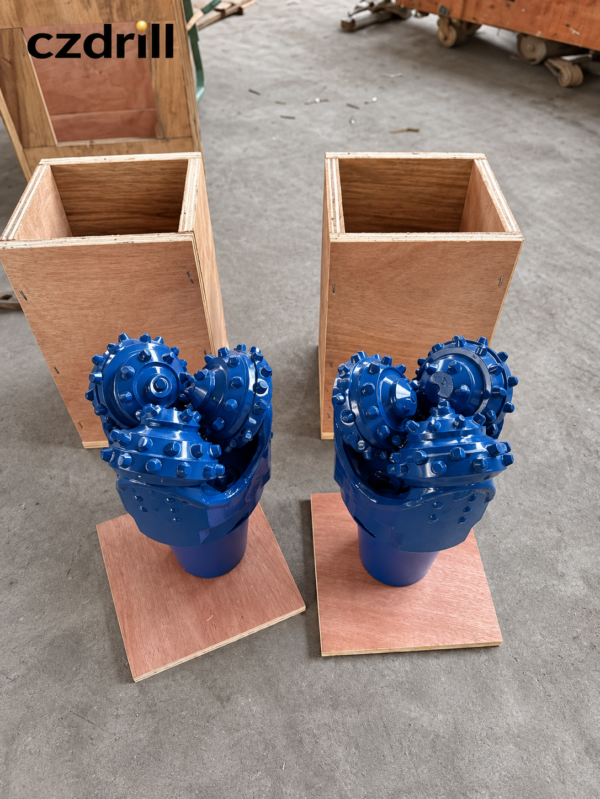
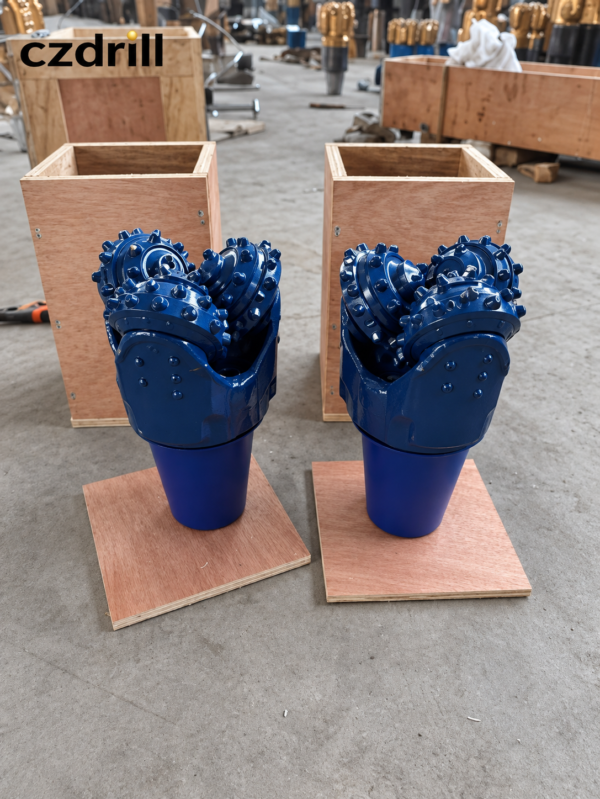
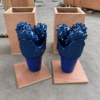
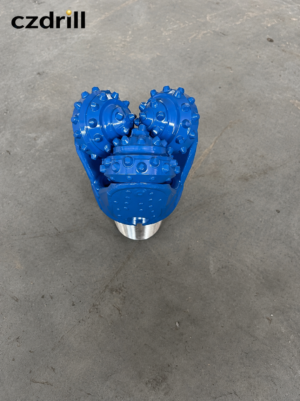
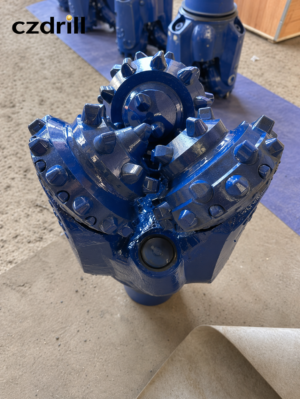
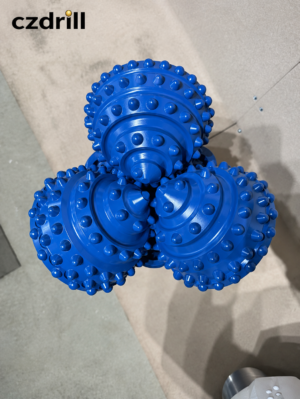
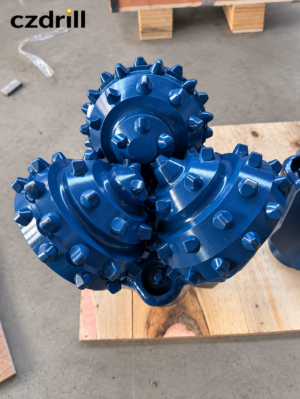
5 Inch Tricone Bit IADC 537G Sealed Bearing Guide
5″ (127 mm) IADC 537G Tricone Drill Bit | TCI Sealed Bearing
This 5 inch (127 mm) IADC 537G tricone drill bit is designed for soft to medium-hard formations with abrasive interbeds. High-strength tungsten carbide inserts deliver superior wear resistance and impact toughness compared with steel-tooth bits. The sealed journal bearing (elastomer or metal-to-metal seal optional) reduces bearing wear and supports longer single runs, while G-type gauge protection stabilizes the borehole diameter and reduces reaming. Compatible with small and medium-sized drilling rigs, with mud circulation passages and nozzles for effective cooling and cuttings removal. API compliant, with API REG thread available. IADC code can be customized.
Applications: water well drilling, geological exploration, mine blast holes, small-size pile foundations, trenchless pilot holes and shallow mine drilling.
What Is a 5 Inch (127 mm) Tricone Drill Bit?
A 5 inch tricone bit (metric equivalent: 127 mm tricone bit) is a rotary drilling tool designed for drilling accurate, small-diameter holes through diverse geological formations. Built with three independently rotating cones mounted on precision bearings, this tool crushes, gouges, and shears rock formations under combined downward force (Weight on Bit) and rotation (RPM).
Core Components & Engineering
- Three-Cone Geometry: Features interlocking roller cones configured with optimized tooth patterns to maximize rock fracturing while preventing balling.
- Cutting Structures: Available with durable Tungsten Carbide Inserts (TCI) for hard, abrasive rock, or milled steel teeth for softer strata.
- Bearing Systems: Utilizes precision-machined friction journal or roller bearings—frequently sealed to isolate bearings from abrasive drilling fluids and downhole debris.
- Hydraulic Flushing: Integrated fluid nozzles channel drilling mud or compressed air directly to the hole bottom, rapidly clearing cuttings and cooling the cutting elements.
This bit size is engineered for operations requiring tight borehole tolerances, structural stability, and consistent penetration rates across exploration, blast hole, and geotechnical drilling applications.
Understanding the IADC 537G Code
When you order a 5 inch tricone bit, the four-character IADC code tells you exactly how the tool is built and where it belongs in the ground. The International Association of Drilling Contractors (IADC) standard eliminates guesswork so we can match the bit directly to your formation.
Here is how our IADC 537 tricone bit breaks down:
- First Digit (5) – Cutting Structure: Represents a TCI tricone drill bit engineered for soft-to-medium rock formations with low compressive strength, such as medium shale, sandstone, and soft limestone.
- Second Digit (3) – Hardness Grade: Denotes the specific hardness rating within the medium formation class, indicating tougher carbide inserts positioned to crush interbedded stringers without chipping.
- Third Digit (7) – Bearing and Seal: Signifies an elastomer-sealed journal bearing. This sealed bearing tricone bit system locks out abrasive drilling fluids while retaining synthetic grease under heavy weight-on-bit (WOB).
- Suffix Letter (G) – Gauge Protection: Indicates reinforced tungsten carbide compacts embedded along the cone gauge surfaces and shirt-tail to maintain a true 5-inch (127 mm) hole diameter from surface to total depth.
Quick Reference Guide
| Code Element | Meaning | Operational Value |
|---|---|---|
| 5 | Medium Formation TCI | Balanced impact and wear resistance |
| 3 | Semi-Abrasive Rock Class | Handles harder rock layers effortlessly |
| 7 | Sealed Journal Bearing | Maximizes downhole hours in tough drilling mud |
| G | Enhanced Gauge Hardfacing | Prevents under-gauge hole issues and tight pulls |
Understanding this classification ensures you run a bit optimized for long rotating hours, steady penetration rates, and full-gauge borehole stability.
Key Specifications
We build our 5 inch tricone bit to handle high-stress drilling while maintaining consistent penetration rates. Below are the standard operational and design parameters for our 127 mm tricone bit lineup:
| Parameter | Technical Specification |
|---|---|
| Nominal Diameter | 5 inch (127 mm) |
| IADC Code | 537 / 537G |
| Cutter Type | TCI (Tungsten Carbide Insert) |
| Bearing System | Elastomer Sealed Journal Bearing |
| Standard Pin Connection | 3 1/2″ API Regular (2 7/8″ API optional) |
| Nozzle Quantity | 3 interchangeable jet nozzles |
| Recommended WOB | 0.35 – 0.90 kN/mm (10,000 – 22,000 lbs) |
| Operating Rotary Speed | 50 – 110 RPM |
| Body Material | High-strength alloy steel forging |
| Manufacturing Standard | API Spec 7-1 certified |
Core Build Highlights
- Precision-Matched Carbide Inserts: Engineered with heavy-duty conical and chisel-shaped compacts to crush hard, abrasive rock formations without premature breakage.
- Advanced Seal Protection: An elastomer O-ring seal locks in high-temperature synthetic grease, protecting the journal bearing from abrasive drilling fluids and downhole debris.
- Reinforced Gauge Row: Carbide inserts set into the shirt-tail and gauge surface resist hole under-gauging and extend bit life in directional or deep vertical runs.
Why Choose a TCI Tricone Drill Bit?
When you are drilling through abrasive ground or hard rock formations, standard steel-tooth bits wear down fast. That is why we engineer our 5 inch tricone bit setups with Tungsten Carbide Inserts (TCI). A TCI tricone drill bit handles high-stress crushing and chipping without losing its cutting profile prematurely.
Superior Wear Resistance and Extended Bit Life
Milled-tooth bits work well in soft mud or clay, but medium-to-hard rock demands heavy-duty endurance. We press premium tungsten carbide compacts directly into the alloy steel cones under high interference fits. This construction withstands heavy downhole weights, resists abrasive strata, and keeps the cones cutting efficiently long after standard steel teeth would have flattened out.
TCI vs. Milled Tooth: Quick Comparison
| Feature | 5 Inch TCI Tricone Bit | Standard Milled Tooth Bit |
|---|---|---|
| Target Formations | Medium to hard, abrasive rock (granite, dolomite, limestone) | Soft to medium-soft formations (clay, shale, soft sand) |
| Cutting Structure | High-grade tungsten carbide inserts | Machined forged-steel teeth with hardfacing |
| Abrasion Resistance | Extremely high; resists insert breakage and gauge loss | Moderate; prone to rapid wear in silica and abrasive stone |
| Total Footage | High total footage per bit run | Lower footage when encountering hard streaks |
| Trip Downtime | Fewer bit trips; keeps the drill string rotating | Frequent tripping required to replace worn cutters |
Key Advantages on the Rig
- Lower Cost per Foot: A 127 mm tricone bit equipped with TCI costs more up front, but the extended footage cuts your overall cost per foot dramatically.
- Minimized Bit Trips: Pulling pipe to swap worn tooling eats up crew hours. TCI inserts preserve hole diameter and cutting structure, slashing non-productive time.
- Consistent Penetration Rates: The geometry of the carbide inserts maintains uniform bottom-hole contact, delivering a steady, predictable Rate of Penetration (ROP).
Sealed Bearing Technology Explained
When running a 5 inch tricone bit, bearing life determines your overall drilling performance. Because a 127 mm tricone bit utilizes smaller cones that spin at higher revolutions per minute, heat and friction build up rapidly. Our sealed bearing tricone bit lineup is built specifically to handle these demanding conditions without premature failure.
How the Sealed Bearing System Works
Instead of exposing internal components to destructive drilling mud and abrasive cuttings, our sealed design relies on a multi-stage defense system:
- Precision Elastomer O-Ring Seal: High-temperature, wear-resistant seals isolate the roller and ball bearings, locking out solid particles and corrosive drilling fluids.
- Pressure Equalization Diaphragm: A built-in pressure compensation system balances downhole hydrostatic pressure with internal lubricant pressure. This prevents the seals from blowing out or collapsing as borehole depths increase.
- Lubricant Reservoir: Internal grease cavities deliver continuous synthetic grease directly to load-bearing contact points during high-load rotation.
- Anti-Friction Surface Treatments: Critical friction surfaces feature silver plating and specialized hardfacing to lower heat buildup and prevent cone seizure under heavy weight on bit (WOB).
Why Sealed Bearings Outperform Open Bearings
| Feature | Standard Open Bearing | Our Sealed Bearing System |
|---|---|---|
| Mud Protection | Fluid enters bearing race | 100% sealed against cuttings and mud |
| Lubrication | Relies on drilling fluid | Dedicated synthetic high-load grease |
| Bearing Life | Shorter run times | Extended bottom-hole hours |
| Cone Lock Risk | High in abrasive formations | Minimal |
By keeping drilling grit out and clean lubrication in, this system protects your 5 inch tricone bit against cone loss and gauge wear, saving you costly tripping hours on every job.
Gauge Protection (G Suffix) Benefits
When you spot the “G” suffix on our 5 inch tricone bit, it indicates specialized gauge protection engineered directly into the cones and bit body. Abrasive formations can quickly wear down the outer diameter of a standard bit, leading to an under-gauge hole, stuck pipe risks, and wasted rig time reaming the hole later.
We add heavy-duty tungsten carbide inserts to the heel row and apply proprietary hardfacing to the shirttail to make sure your 127 mm tricone bit drills full-diameter hole from start to finish.
Core Advantages of Gauge Row Reinforcement
- Maintains Hole Caliper: Holds true 5-inch hole size across abrasive intervals, eliminating tight spots for your casing runs.
- Protects the Bearing System: Uneven cone wear puts unbalanced thrust on the journals. Our gauge protection keeps our sealed bearing tricone bit running balanced and smooth.
- Eliminates Costly Reaming: The next bit or casing string slides right to bottom without spending hours reaming out tapered hole.
- Extends Shirttail Life: Hardfaced wear pads shield the seal cavity from sand and cuttings erosion.
Standard Bit vs. “G” Protected Bit
| Performance Feature | Standard Bit | 5 Inch Tricone Bit with “G” Suffix |
|---|---|---|
| Heel Row Inserts | Standard steel or basic carbide | Diamond-grade tungsten carbide inserts (TCI) |
| Shirttail Defense | Untreated carbon steel | Wear-resistant tungsten hardfacing pads |
| Borehole Quality | Risk of tapered or tight hole | Consistent, clean 127 mm borehole |
| Drilling Cycle Life | Premature pull due to gauge loss | Maximum run life until the cutting structure is fully spent |
By integrating gauge protection into our TCI tricone drill bit line, we ensure your drilling operations stay on schedule, within spec, and within budget.
Mud Circulation and Nozzle Design
Effective hydraulics can make or break your penetration rate. In our 5 inch tricone bit, we engineer the fluid flow to maximize bottom-hole cleaning, keep the cutting structure cool, and prevent bit balling in sticky zones.
Optimized Jet Hydraulics
Our 127 mm tricone bit features a precision-machined three-jet nozzle system. We position each fluid port to sweep directly across the bottom of the hole and around the cones, ensuring instant cuttings removal.
- Interchangeable Jet Nozzles: Easily swap nozzle sizes to match your rig’s specific pump pressure and flow rate requirements.
- Targeted Cooling: Uninterrupted fluid paths wash over the tungsten carbide inserts and bearing seals to carry away frictional heat.
- Anti-Balling Flow: Streamlined fluid courses eliminate dead zones where crushed rock and sticky shale typically pack off.
Circulation Specs at a Glance
| Feature | Design Advantage |
|---|---|
| Nozzle Setup | 3 replaceable threaded jet nozzles |
| Jet Flow Direction | Targeted directly at the hole bottom and cone intermesh zones |
| Hydraulic Impact | High-velocity fluid velocity for immediate chip evacuation |
| Fluid Compatibility | Air, mist, water, and weighted drilling mud |
By keeping the cutting zone clear of debris, our TCI tricone drill bit directs your rig’s full energy into fracturing fresh rock instead of re-grinding old cuttings.
Suitable Formations
We engineer the 5 inch tricone bit to handle tough, abrasive strata that quickly wear down standard milled tooth bits. Featuring optimized tungsten carbide inserts (TCI), this 127 mm tricone bit delivers exceptional penetration rates in medium to medium-hard rock profiles with high compressive strength.
Target Geological Formations
- Dense Carbonates: Massive limestone, dolomitic limestone, and crystalline dolomite.
- Abrasive Sandstones: Quartzite-rich sands, hard sandstones, and gritty siltstones that cause severe friction wear.
- Hard Shales & Evaporites: Silty shales, anhydrite beds, and gypsum layers requiring sustained point-load crushing.
- Interbedded Strata: Alternating soft-to-hard rock layers, including shale sequences embedded with chert nodules.
| Rock Formation | Compressive Strength & Properties | Optimal Drilling Action |
|---|---|---|
| Abrasive Sandstone | High abrasiveness, medium-hard matrix | High-impact chipping and crushing |
| Hard Limestone | High compressive strength, dense structure | Fracture gouging under steady weight on bit |
| Dolomite | Brittle, dense, low natural permeability | Direct point-contact impact |
| Chert-Streaked Shale | Uneven hardness, high shock potential | Balanced insert loading to minimize insert breakage |
Performance in Hard Strata
Running our TCI tricone drill bit in these specific rock types prevents premature gauge wear and broken compacts. The insert shape and layout focus downward drilling weight directly on the rock face, breaking the formation via high compressive stress rather than inefficient scraping.
Applications of a 5 Inch Tricone Bit
When our clients need rock-crushing power inside tight borehole clearances, we supply the 5 inch tricone bit. This 127 mm profile delivers the high structural strength of larger tools while keeping fluid requirements and rig footprints minimal.
Primary Field Applications
- Water Well and Geothermal Drilling: Ideal for shallow-to-medium domestic water wells, monitoring holes, and closed-loop geothermal installations requiring slim casing profiles.
- Mineral Exploration and Blast Holes: Crews rely on this TCI tricone drill bit for blast hole preparation in hard-rock quarries and chip sampling across exploratory mineral projects.
- Geotechnical and Foundation Work: Built to pre-drill anchor holes, micro-piling channels, and foundation piers through stubborn bedrock without hole deviation.
- Oil and Gas Slimhole Drilling: Frequently run in deep exploratory tests, workovers, and sidetracking operations where narrow-diameter holes drastically lower mud and casing expenses.
- HDD Pilot Runs: Functions as an aggressive lead bit in horizontal directional drilling to cut a precise pilot path through solid rock before back-reamers take over.
Application Performance Matrix
| Industry Sector | Target Application | Key Operational Advantage |
|---|---|---|
| Water Wells | Cased domestic wells & heat loops | Fast penetration with standard truck-mounted rigs |
| Mining & Quarrying | Blast holes & core exploration | Tough cutting structure resists premature tooth wear |
| Civil Engineering | Micro-piles & rock anchoring | Stable rotation keeps boreholes straight and true |
| Energy & Exploration | Slimhole drilling & sidetracks | Low fluid volume demand reduces overall drilling costs |
From abrasive sandstones to fractured limestone, our 127 mm tricone bit stays on gauge and holds up against demanding downhole conditions where other cutters fail.
How to Choose the Right Tricone Bit
Selecting the right 5 inch tricone bit comes down to matching your ground conditions, rig capabilities, and drilling method. Using the wrong profile burns through your budget and wears out cutters fast. We evaluate four core factors to get you the best-performing tool for the job.
Key Factors to Evaluate
- Rock Hardness and Compressive Strength: Match your formation to the proper IADC series. Soft ground requires tall, widely spaced teeth, while hard rock demands dense tungsten carbide inserts.
- Cutting Structure: Choose between milled steel teeth for softer, non-abrasive ground and a durable TCI tricone drill bit for medium to ultra-hard strata.
- Bearing Assembly: For deep hole runs and high-torque jobs, always run a sealed bearing tricone bit. Open roller bearings are budget-friendly but best suited for shallow, quick drilling.
- Circulation Type: Align your bit nozzles with your flush system—whether running standard drilling mud, water, or compressed air rotary.
Quick Selection Guide for a 127 mm Tricone Bit
| Formation Profile | Cutting Structure | Recommended Bearing | Common IADC Code |
|---|---|---|---|
| Soft Formations (Clay, unconsolidated sand, soft shale) | Milled Tooth (Steel Tooth) | Standard or Sealed Roller | IADC 116 – 137 |
| Medium Formations (Limestone, medium sandstone, dolomite) | TCI (Chisel Inserts) | Sealed Roller or Journal | IADC 437 – 517 |
| Hard & Abrasive Formations (Granite, quartzite, chert) | TCI (Conical/Spherical Inserts) | Sealed Journal Bearing | IADC 537 – 637 |
For tough, abrasive drilling, choosing an IADC 537 tricone bit with heel gauge protection gives you the ideal balance of penetration rate and hole gauge retention. Always verify your drill string’s thread connection and ensure your rig delivers the correct Weight on Bit (WOB) and rotary speed (RPM) for the chosen design.
FAQ
What does IADC 537G mean?
The IADC 537G code defines the mechanical design and working capacity of this TCI tricone drill bit:
- 5 (Series): Indicates a Tungsten Carbide Insert (TCI) design built for medium-to-hard rock formations.
- 3 (Type): Classifies the cutting structure for semi-abrasive rock with high compressive strength.
- 7 (Bearing/Seal): Represents a premium sealed bearing tricone bit with advanced journal bearing protection.
- G (Gauge): Confirms reinforced gauge protection featuring extra carbide inserts along the heel row to prevent diameter wear.
Can the IADC code be customized?
Yes, we regularly customize cutting structures and bearing configurations based on your specific drilling data. While an IADC 537 tricone bit is standard for medium-hard rock, we can modify the carbide insert shape (conical, chisel, or hemispherical), adjust nozzle sizes, or switch to alternative IADC profiles (such as 517, 527, or 617) to match your ground formation and rig parameters.
What formations suit a 5 inch tricone bit?
Our 5 inch tricone bit (127 mm) is engineered to drill through medium to hard, abrasive rock formations without premature wear. Common formations include:
- Hard limestone and dolomite
- Abrasive sandstones and quartzite streaks
- Compacted shales and anhydrite
- Medium-hard granite and mineral deposits
What thread connection does this bit use?
A standard 127 mm tricone bit typically comes engineered with a 2-7/8″ API Regular pin connection. This industry-standard threading guarantees a tight, leak-proof seal and direct compatibility with standard drill collars and crossover subs. Custom connections can also be machined upon request.
Is this tricone bit API compliant?
Every 5 inch tricone bit we manufacture complies fully with API Spec 7-1 and ISO quality standards. From thread profiles and heat treatment to tungsten carbide grades, each bit meets global oilfield and mining tolerances for complete interchangeability on your rig.