WhatsApp:+86 19933284353

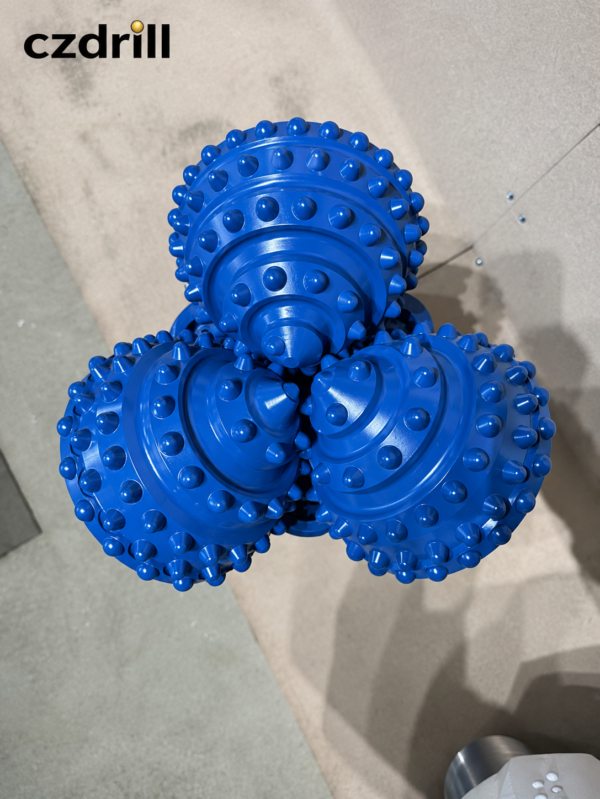
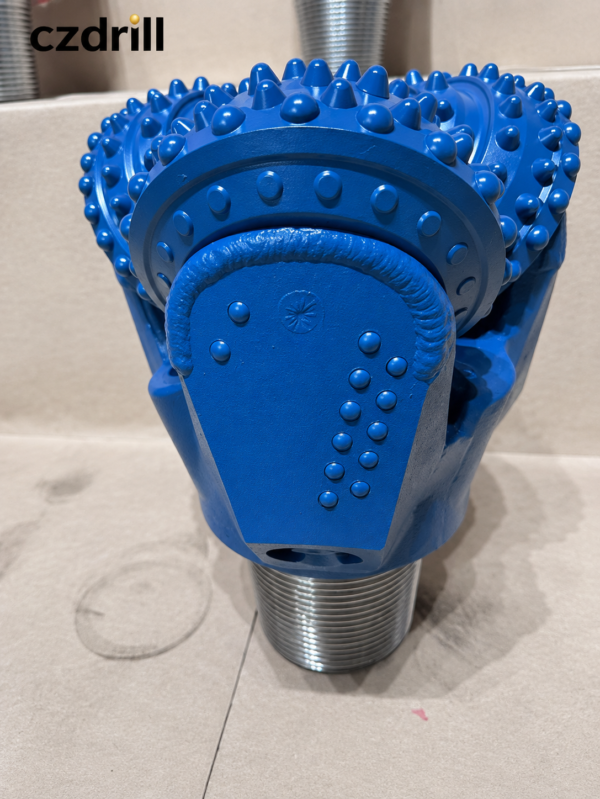
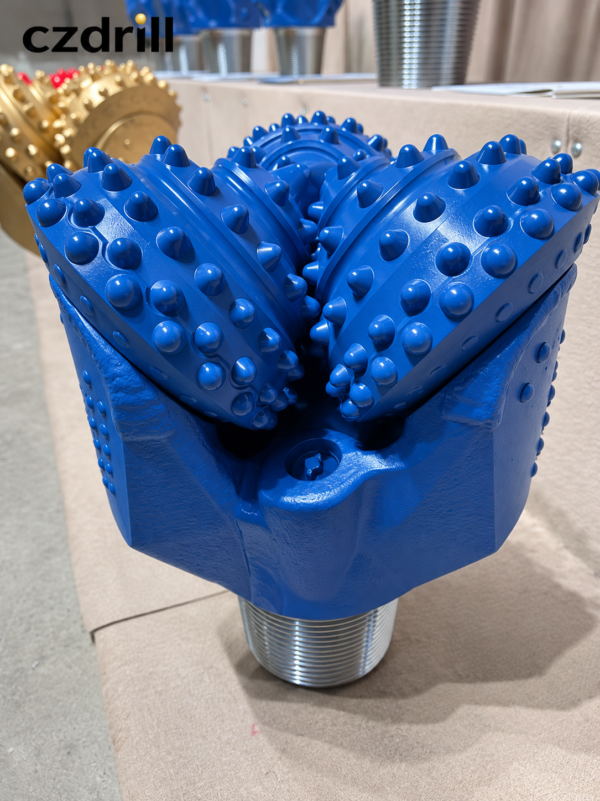
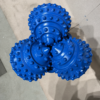
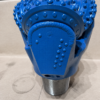

12 1/4″ Inch Tricone Bit IADC 637G for Hard Rock
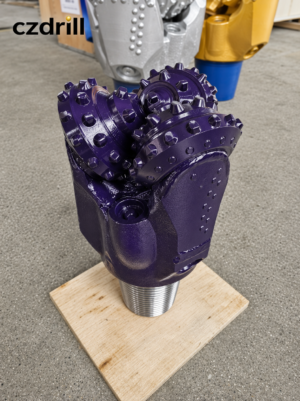
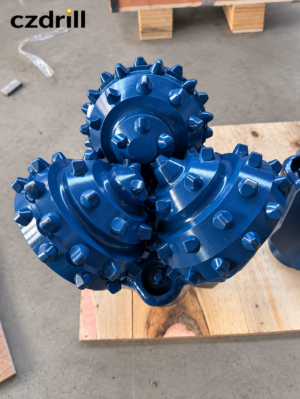
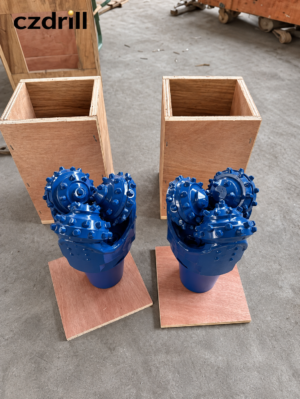
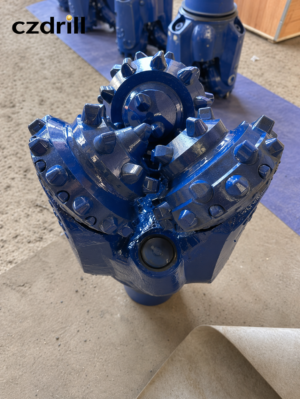
12 1/4″ (311 mm) IADC 637G Tricone Drill Bit | TCI Sealed Bearing
This 311 mm (12 1/4 inch) IADC 637G tricone drill bit is built for demanding hard rock drilling. High-strength tungsten carbide inserts deliver strong wear resistance and impact toughness in abrasive, high-hardness formations. The sealed journal bearing (elastomer or metal-to-metal seal optional) extends downhole life and supports longer runs, while G-type gauge protection keeps the borehole diameter stable and cuts down on reaming. Mud circulation passages and nozzles ensure effective cooling and cuttings removal. API compliant, with API REG thread available. IADC code can be customized.
Applications: water well drilling, geothermal drilling, geological exploration, mining engineering, oil and gas drilling, and large-diameter hard-rock projects.
What Is a 12 1/4 Inch (311 mm) Tricone Drill Bit?
A 12 1/4 inch tricone bit (311 mm) is a heavy-duty rotary drilling tool engineered to bore through complex geological formations. Built with three independently rotating cones fitted with precision-engineered cutting elements, this tool crushes, gouges, and shears rock as the drill string rotates under downward weight.
In global drilling operations, the 12 1/4″ hole profile serves as an industry-standard benchmark, frequently deployed for surface casing holes, intermediate drilling intervals, and large-diameter production wells.
Core Engineering Features
- Three-Cone Geometry: Delivers balanced load distribution across the bottom of the borehole, minimizing vibration and ensuring steady penetration rates.
- Standard 311.1 mm Diameter: Perfectly dimensioned for standard casing programs across energy, exploration, and infrastructure projects.
- Dual Cutting Configurations: Available with milled steel teeth for softer strata or tungsten carbide inserts (TCI) for abrasive, high-strength rock formations.
- Optimized Downhole Hydraulics: Uses strategically placed mud nozzles to clean the cutting structure continuously and flush cuttings to the surface.
Whether drilling through unconsolidated sandstones or tough, abrasive limestone, our 12 1/4 inch tricone drill bits provide the structural integrity and footage consistency required to keep operational costs low and penetration rates high.
Understanding the IADC 637G Code
When selecting our 12 1/4 inch tricone bit, the standard IADC classification system eliminates guesswork by defining the exact cutting structure, bearing design, and formation capability. Choosing an IADC 637 tricone bit ensures your tooling is configured for demanding downhole environments.
Here is the straightforward breakdown of the IADC 637G classification:
- First Digit (6): Indicates a TCI tricone drill bit featuring tungsten carbide inserts designed for hard, abrasive rock formations.
- Second Digit (3): Defines the hardness grade within the series, targeting semi-hard to hard formations with high compressive strength.
- Third Digit (7): Specifies a sealed journal bearing assembly engineered to handle high loads, steady rotation, and elevated bottom-hole temperatures.
- Suffix (G): Designates extra gauge protection, utilizing reinforced carbide compacts along the cone heel and shirt-tail to maintain the full 311 mm hole diameter.
Understanding this configuration ensures your 12 1/4″ assembly delivers dependable penetration rates and stable tool life during hard rock drilling operations.
Key Specifications
We build our 12 1/4 inch tricone bit to handle demanding borehole conditions across diverse drilling environments. Below are the standard technical parameters for this 311 mm tricone bit platform:
| Parameter | Technical Specification |
|---|---|
| Nominal Diameter | 12 1/4 inch (311.1 mm) |
| Cutting Structure | TCI (Tungsten Carbide Insert) / Milled Steel Tooth |
| IADC Classification | Suitable for soft to hard formations (including IADC 637 series) |
| Bearing Type | Sealed journal bearing / Sealed roller bearing |
| Thread Connection | Standard API Regular pin connection |
| Hydraulics | Replaceable fluid jet nozzles |
| Gage Protection | Carbide gage inserts and hardfaced shirt-tail |
Operational Highlights
- Precision Sizing: Standard 12 1/4″ profile ensures consistent wellbore geometry from surface hole to target depth.
- Tough Cutting Structure: Available as a TCI tricone drill bit engineered for high compressive rock, as well as steel tooth profiles for softer drilling.
- Robust Sealing: Advanced bearing seals protect critical wear components against downhole heat, abrasive mud, and heavy vibration during hard rock drilling.
Why Choose a TCI Tricone Drill Bit?
When drilling tough, abrasive intervals, a standard steel tooth bit wears down quickly. We equip our 12 1/4 inch tricone bit setups with Tungsten Carbide Inserts (TCI) to maximize downhole life, maintain penetration rates, and reduce costly trips out of the hole.
Choosing a TCI tricone drill bit provides clear mechanical and operational advantages:
- Extreme Wear Resistance: Premium tungsten carbide compacts resist heavy abrasion in dense sandstone, limestone, and granite.
- Extended Gauge Life: Insert profiles hold hole diameter accurately across long drilling runs.
- Lower Cost per Foot: Fewer bit changes mean less rig downtime and faster overall project completion.
- Impact Strength: Engineered carbide grades handle high weight on bit (WOB) without premature insert fracture.
TCI vs. Steel Tooth Performance Overview
| Feature | TCI Tricone Bit | Milled / Steel Tooth Bit |
|---|---|---|
| Cutting Structure | Tungsten carbide inserts pressed into cones | Teeth machined directly from steel cone body |
| Formation Compatibility | Medium, hard, and abrasive rock strata | Soft to medium-soft formations |
| Durability in Hard Rock | High wear and impact resistance | Rapid tooth wear in abrasive zones |
| Bit Run Longevity | Extended downhole hours per run | Shorter lifespan in hard intervals |
| Best Operational Value | Deep drilling, hard rock, geothermal, and mining | Fast penetration in shallow, unconsolidated ground |
For projects requiring consistent diameter integrity and sustained performance in demanding geology, our 12 1/4 inch TCI bits deliver the durability needed to keep drilling operations on schedule.
Sealed Bearing Technology Explained
When running a 12 1/4 inch tricone bit through tough intervals, bearing reliability dictates run length. We engineer our sealed bearing assemblies to protect critical contact surfaces from high downhole temperatures, extreme loads, and abrasive drilling fluids.
Core Components of Our Sealed System
- Precision Elastomer Seal: Premium radial seals lock synthetic lubricant inside the bearing cavity while blocking drilling mud and fine cuttings.
- Pressure Compensation System: A flexible diaphragm equalizes internal grease pressure with external borehole hydrostatic pressure, preventing seal deformation and blowout.
- Heavy-Duty Journal and Roller Design: High-precision bearing surfaces spread axial and radial loads evenly across the cone to reduce friction and eliminate hot spots.
Operating Advantages in the Field
- Longer In-Gauge Hours: Sustained lubrication prevents premature bearing lockup, allowing the 12 1/4″ tricone bit to stay on bottom longer.
- Higher Weight on Bit (WOB) Capacity: Sealed journals absorb aggressive drilling parameters without galling or spalling.
- Reduced Downhole Risk: Consistent cone stability prevents off-center rotation, gage ring wear, and costly cone loss downhole.
Gauge Protection (G Suffix) Benefits
When running a 12 1/4 inch tricone bit through abrasive formations, holding full hole diameter is critical. The “G” suffix indicates heavy-duty gauge protection built directly into our bit architecture. We reinforce the gauge row and shirt-tail to shield the bearings and eliminate under-gauge drilling problems.
Core Benefits of Built-In Gauge Protection
- True Full-Gauge Borehole: Tungsten carbide compacts placed along the gauge pads prevent diameter shrinkage, keeping your hole at a true 12 1/4 inches (311 mm) from surface to target depth.
- Bearing and Seal Defense: Reinforced hardfacing on the shirt-tail deflects abrasive cuttings away from sensitive seal areas, preventing early bearing failure.
- Zero Reaming on Subsequent Runs: By eliminating tapered or tight hole sections, our gauge protection saves you hours of costly reaming when tripping in with the next drill string or casing run.
- Extended In-Hole Life: Balanced wear resistance across both the cutting structure and the bit outer diameter delivers maximum footage per run.
Gauge-Protected (G) vs. Standard Configuration
| Feature | Standard Bit Profile | With “G” Gauge Protection |
|---|---|---|
| Gauge Row Inserts | Basic coverage | Heavy-duty tungsten carbide inserts |
| Shirt-Tail Area | Standard surface finish | Wear-resistant tungsten hardfacing |
| Hole Consistency | Prone to gauge loss in hard rock | Consistent full-diameter profile |
| Bit Longevity | Shorter life in abrasive zones | Maximum durability and footage |
Mud Circulation and Nozzle Design
Efficient downhole hydraulics keep drilling operations moving fast. In our 12 1/4 inch tricone bit designs, fluid circulation and nozzle engineering work directly together to sweep cuttings away instantly and protect the cutting structure under high-load conditions.
Optimized Bottom-Hole Cleaning
We configure the fluid flow to deliver targeted, high-velocity fluid jets right at the rock-tooth interface. This rapid evacuation prevents cuttings from being re-drilled and keeps the bit from balling up during runs.
- Interchangeable Jet Nozzles: Accommodate various flow rates and pump pressures by easily swapping nozzle sizes to hit the exact crossflow velocity required.
- Targeted Flow Geometry: Fluid paths direct mud across the cone teeth to clean cutting elements continuously while dissipating frictional heat.
- Annular Velocity Support: Clean hydraulic balance sweeps suspended solids up the annulus quickly, cutting down abrasive wear on the bit body and shirt-tail.
Suitable Formations
We engineer our 12 1/4 inch tricone bit lineup to tackle diverse geological profiles by matching insert profiles and cutting structures directly to rock compressive strength. Choosing the right configuration ensures maximum penetration rates while protecting cones from premature wear.
Target Formations and Rock Types
- Soft Formations: Low compressive strength layers such as soft shale, clay, sand, and unconsolidated limestone. These zones utilize widely spaced inserts that gouge and scrape material out rapidly.
- Medium-Hard Formations: Abrasive sandstone, hard limestone, dolomite, and compacted carbonate strings. These require durable carbide grades capable of chipping and crushing without fracturing under heavy downhole weight.
- Hard Rock Drilling: Highly abrasive, dense rocks such as granite, quartzite, basalt, and chert. In these hostile intervals, our tricone bit for hard rock drilling uses tough tungsten carbide inserts engineered to crush hard rock through high point-loading impact.
Selecting the proper TCI tricone drill bit cutting structure for your target interval maintains full gage diameter, controls vibration, and maximizes total footage drilled.
Applications of a 12 1/4 Inch Tricone Bit
We supply the 12 1/4 inch tricone bit as an essential workhorse across several heavy-duty drilling sectors. Operating at a 311 mm diameter, this tool profile is standard for critical surface and intermediate intervals where maintaining a straight, stable borehole is vital for downstream operations.
Primary field applications include:
- Oil and Gas Well Drilling: Widely run in intermediate casing intervals to clear the path for standard casing sizes (such as 9 5/8-inch casing) before drilling into deeper reservoir formations.
- Geothermal Wells: Engineered to handle high bottom-hole temperatures, abrasive fractures, and steam-bearing formations where cutting structure endurance is critical.
- Deep Water Well Projects: Utilized for commercial, agricultural, and municipal water wells that demand large-diameter hole capacity through mixed rock layers and deep aquifers.
- Mining and Ventilation Shafts: Applied in mine dewatering, blast hole drilling, and pilot holes for raised boring systems cutting through hard rock formations.
- Civil Construction and Piling: Ideal for large-diameter foundation drilling, bridge caisson boring, and penetrating tough underground obstructions or boulders.
How to Choose the Right Tricone Bit
Selecting the right 12 1/4 inch tricone bit comes down to matching the cutting structure and bearing design to your borehole profile, compressive rock strength, and rig capabilities.
To maximize penetration rates and avoid premature bit wear, we evaluate four essential criteria before putting a bit downhole:
- Formation Hardness and Abrasiveness: Soft shale and clays require aggressive gouging-scraping action with long, widely spaced teeth. Hard, abrasive formations require compact tungsten carbide inserts (TCI) with closer spacing to crush rock under heavy load.
- Tooth Configuration: Choose steel-tooth (milled-tooth) bits for fast, economical drilling in soft to medium-soft layers. Choose a TCI tricone drill bit for harder strata and extended downhole life.
- Bearing System: Sealed journal bearings provide the stability and endurance required for deep, high-load operations, while sealed roller or open bearings serve shallower, cost-sensitive projects.
- Gage Protection: In deviated holes or highly abrasive rock, reinforced gage inserts ensure the bit maintains a true 12 1/4 inch (311 mm) hole diameter throughout the run.
12 1/4″ Tricone Bit Selection Matrix
| Drilling Condition | Recommended Bit Type | Bearing Type | Primary Focus |
|---|---|---|---|
| Soft, Low Compressive Formations (Clay, Sand, Soft Shale) | Milled Tooth / Low IADC TCI | Sealed Roller Bearing | Maximum rate of penetration (ROP) and large chip removal |
| Medium Formations (Limestone, Sandstone, Dolomite) | Medium IADC TCI (Chisel Inserts) | Sealed Journal Bearing | Balanced impact resistance and cutting efficiency |
| Hard, Abrasive Formations (Granite, Quartzite, Hard Chert) | High IADC TCI (Conical/Ovoid Inserts) | Sealed Journal Bearing with Gage Inserts | High crushing capability, gage holding, and thermal stability |
Matching your 12 1/4 inch tricone bit to exact rock characteristics ensures stable torque, prevents tooth breakage, and keeps your cost per foot as low as possible.
FAQ
What does IADC 637G mean?
The IADC 637G classification identifies a specific cutting structure and mechanical design for roller cone bits:
- 6: Indicates a Tungsten Carbide Insert (TCI) cutting structure designed for hard, abrasive rock formations.
- 3: Represents the formation hardness sub-classification, suited for high-compressive-strength strata.
- 7: Specifies a sealed journal bearing with advanced gauge protection.
- G: Denotes additional gauge and heel row protection to preserve full-hole diameter during drilling.
Can the IADC code be customized?
Yes. We adjust cutting structures, insert shapes (such as chisel, conical, or scoop), and bearing configurations to match your exact geological profile, whether you are dealing with soft shale or interbedded chert.
What formations suit a 12 1/4 inch tricone bit?
A 12 1/4 inch tricone bit covers a broad operating window depending on the insert profile:
- Milled tooth / low-IADC bits: Soft to medium formations, including unconsolidated sands, clays, and soft shales.
- TCI / high-IADC bits (e.g., IADC 637): Hard and abrasive rock formations, such as hard limestone, dolomite, quartzite, and abrasive sandstone.
What thread connection does this bit use?
Standard 12 1/4 inch (311 mm) tricone bits are engineered with industry-standard 6 5/8 inch API Regular (API Reg) pin connections, ensuring seamless compatibility with standard drill collars and subs.
Is this tricone bit API compliant?
Yes. We manufacture our bits in strict alignment with API standards and standardized dimensional tolerances to ensure downhole reliability, thread integrity, and optimal hydraulics delivery.