WhatsApp:+86 19933284353

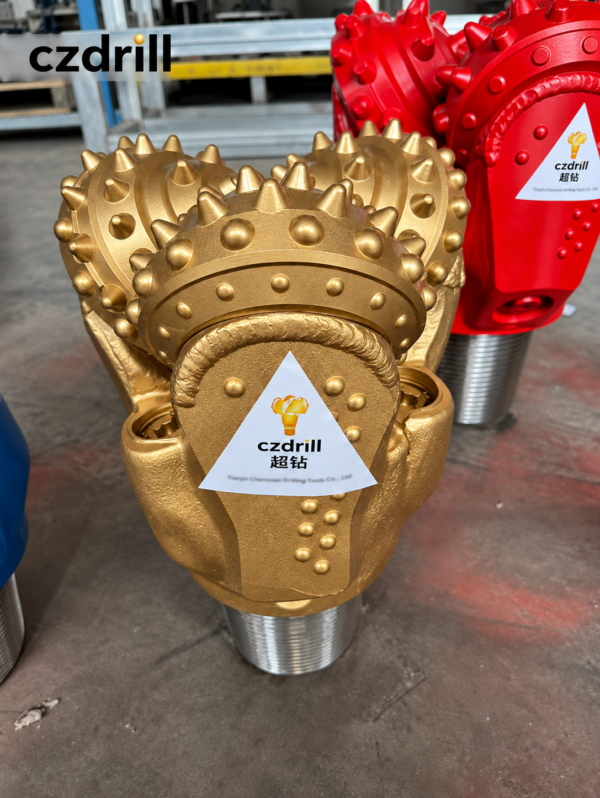
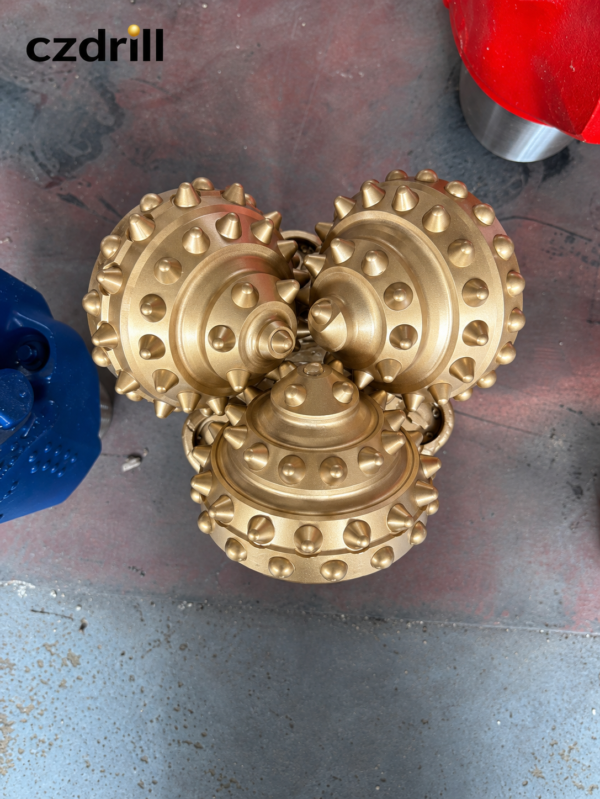
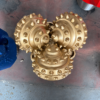
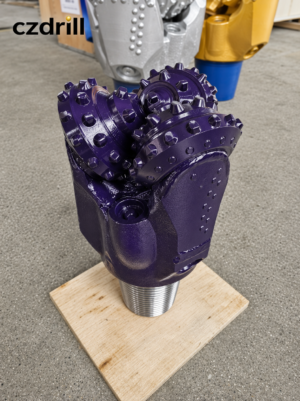
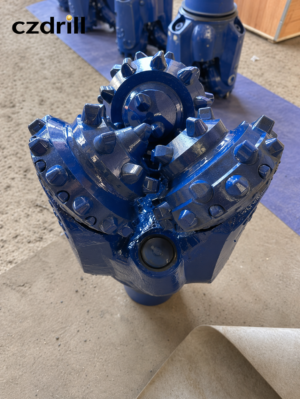
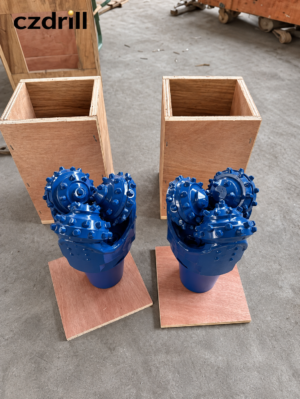
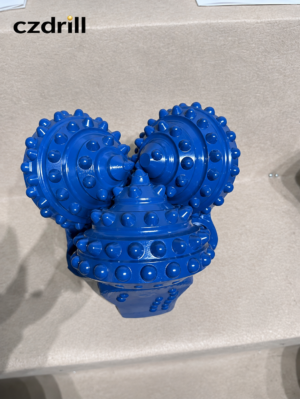
Eight and a Half Inch IADC 637G Hard Rock Tricone Bit
8 1/2″ (215.9 mm) IADC 637G Tricone Drill Bit | TCI Sealed Bearing
This 8 1/2 inch (215.9 mm) IADC 637G tricone drill bit is built for medium-hard to hard rock formations with high compressive strength. High-strength tungsten carbide inserts deliver good impact resistance and wear resistance, with powerful rock-breaking capacity in abrasive, high-hardness strata. The sealed journal bearing (elastomer or metal-to-metal seal optional) reduces bearing wear and supports longer single runs, while G-type gauge protection stabilizes the borehole diameter and reduces reaming. With high load-bearing capacity, it suits medium-to-large rotary drilling rigs, and mud circulation passages and nozzles provide effective cooling and cuttings removal. API compliant, with API REG thread available. IADC code can be customized.
Applications: water well drilling, geothermal drilling, geological exploration, mining engineering, oil and gas drilling and large-diameter hard-rock projects.
What Is an 8 1/2 Inch (215.9 mm) Tricone Drill Bit?
An 8 1/2 inch (215.9 mm) tricone drill bit is an industry-standard rotary drilling tool designed with three conical cutters that rotate on integrated bearings as the drill string turns. As the cones roll across the bottom of the borehole, their cutting elements crush and fracture the rock beneath, clearing a precise 215.9 mm diameter path.
When configured as an 8 1/2 inch IADC 637G tricone bit, the tool features a Tungsten Carbide Insert (TCI) cutting structure engineered specifically for drilling medium-hard to hard formations with high compressive strength.
Key Structural Elements
-
- Cone Geometry: Three engineered cones fitted with high-grade tungsten carbide inserts configured to crush tough, abrasive strata.
- Sealed Journal Bearing System: A precision-lubricated internal friction assembly built to withstand heavy downhole loads and operational heat.
- Enhanced Gauge Defense: Factory-fitted perimeter inserts and shirttail protection to ensure hole integrity and resist under-gauge wear.
- Hydraulic Fluid Ports: Interchangeable jet nozzles that optimize mud flow, cool the bearings, and clear bottom-hole cuttings efficiently.
Understanding the IADC 637G Code
The IADC classification system simplifies how drillers match bit designs to downhole geology. When you deploy an 8 1/2 inch IADC 637G tricone bit, every digit and letter outlines a specific engineering function built for demanding drilling environments.
Here is how our IADC 637 tricone bit breaks down under the standard classification:
-
- First Digit (6) – Cutting Structure Series: Identifies this tool as a TCI tricone drill bit engineered with tungsten carbide inserts for medium-hard to hard formations with high compressive strength.
- Second Digit (3) – Hardness Type: Denotes the hardest cutting structure within the series, featuring compact, durable insert profiles designed to crush hard rock rather than gouge it.
- Third Digit (7) – Bearing and Seal Design: Signifies a sealed journal bearing with an elastomeric seal and built-in gauge protection, engineered to withstand high temperatures and heavy rotary loads downhole.
- Suffix Letter (G) – Gauge Protection: Indicates extra carbide compacts along the gauge bevel and hardfacing on the shirttail to preserve hole diameter in abrasive strata.
For projects targeting formations with slightly lower compressive strength, drillers often compare this setup to our IADC 617 tricone bit to balance penetration rates and wear resistance. Selecting the 637G classification ensures maximum durability when crushing through stubborn, high-strength intervals.
Key Specifications
We engineer the 8 1/2 inch IADC 637G tricone bit to meet demanding downhole requirements across hard, abrasive strata. Every component is balanced to maximize bottom-hole stability, maintain full hole diameter, and resist thermal breakdown during high-load runs.
Technical Data Overview
| Parameter | Specification |
|---|---|
| Nominal Diameter | 8 1/2 inch (215.9 mm) |
| IADC Classification | IADC 637G |
| Cutting Element Type | Tungsten Carbide Inserts (TCI) |
| Formation Type | Medium-hard to hard formations with high compressive strength |
| Bearing System | Sealed journal bearing with high-performance elastomer seal |
| Gauge Enhancement | Enhanced carbide inserts on gauge bevel and hardfaced shirttail (G) |
| Standard Thread Connection | 4 1/2″ API Regular pin |
| Hydraulic System | 3 interchangeable fluid jet nozzles |
Core Mechanical Features
-
- Durable TCI Cutting Structure: High-grade tungsten carbide compacts resist tooth breakage and abrasive wear when drilling through dense limestone, dolomite, and quartzite.
- Sealed Journal Assembly: The elastomeric seal holds clean lubricant within the bearing package, preventing drilling fluid contamination and extending bearing life under continuous load.
- Shirttail Reinforcement: Integrated gauge compacts protect the cone backface and bit body, ensuring a true-gauge borehole as tracked in our verified drilling case studies.
- Tunable Bottom-Hole Cleaning: Three-jet circulation sweeps cuttings away from the cutting face rapidly to avoid regrinding and improve overall rate of penetration.
Why Choose a TCI Tricone Drill Bit?
When drilling through high-compressive formations, standard steel tooth bits wear down rapidly, causing frequent round trips and driving up operational costs. We equip our 8 1/2 inch IADC 637G tricone bit with premium Tungsten Carbide Inserts (TCI) to maximize downhole life, maintain penetration rates, and protect gauge integrity in abrasive environments.
Selecting a TCI tricone drill bit ensures your tooling withstands extreme mechanical stress where conventional bits fail. Detailed downhole ROI considerations can be reviewed in our b2b procurement guide for tricone drill bits.
Key Advantages of TCI Technology
-
- Superior Wear Resistance: High-grade carbide compacts resist fracturing and extreme abrasion in high-strength rock.
- Extended In-Hole Life: Fewer bit trips directly lower rig time and drilling costs per foot.
- Consistent Borehole Diameter: Reinforced insert placement stabilizes the bit body and prevents tight-hole issues.
Comparison: Standard Steel Tooth vs. TCI Tricone Bit
| Feature | Standard Steel Tooth Bit | TCI Tricone Drill Bit (IADC 637) |
|---|---|---|
| Cutting Structure | Milled steel teeth | Tungsten carbide inserts (compacts) |
| Primary Formation | Soft to medium-soft strata | Medium-hard to hard abrasive rock |
| Abrasion Resistance | Moderate | High |
| Bit Life in Hard Rock | Limited; prone to rapid wear | Extended operational life |
| Trip Frequency | High in abrasive zones | Significantly reduced |
For demanding lithologies like hard limestone, dolomite, or abrasive sandstone, a dedicated tricone bit for hard rock drilling provides the cutting strength and bearing protection needed to complete the interval without premature failure.
Sealed Bearing Technology Explained
We build the 8 1/2 inch IADC 637G tricone bit with a high-performance sealed journal bearing package designed to withstand severe downhole shock and heavy loading. In demanding drilling environments, premature bearing degradation causes costly trips. The bearing assembly in our IADC 637 tricone bit isolates critical load-bearing surfaces from abrasive drilling fluids and cuttings.
How the Sealed Bearing System Protects the Bit
-
- Elastomeric Seal Reliability: A resilient elastomeric ring forms a tight barrier that retains internal grease while locking out drilling mud, even under elevated downhole temperatures.
- Pressure Equalization: An integrated reservoir and flexible diaphragm compensate for pressure variations between the borehole annulus and the internal bearing cavity, preventing seal distortion.
- Wear-Resistant Journal Bushings: Hardfaced bearing surfaces minimize friction and resist galling under sustained high weight-on-bit operations.
By integrating rugged precision bearings into our cone assemblies, this TCI tricone drill bit delivers dependable hours on bottom, reducing bearing wear and keeping your drilling operations productive.
Gauge Protection (G Suffix) Benefits
The “G” suffix in our 8 1/2 inch IADC 637G tricone bit indicates dedicated gauge defense engineered to prevent premature diameter loss. In abrasive and hard rock drilling, sidewall friction rapidly wears down standard bit bodies. We counter this wear by integrating heavy-duty carbide inserts and hardfacing directly along the gauge bevel and shirttail areas.
Why Enhanced Gauge Protection Matters
-
- Prevents Under-Gauge Hole: Retains full 8 1/2″ (215.9 mm) diameter throughout long intervals, eliminating the need for costly reaming runs before running casing.
- Shields the Bearing Cavity: Adding tungsten carbide compacts to the shirttail deflects rock cuttings away from the seal area, keeping the sealed journal bearing intact.
- Stabilizes the Cutting Structure: Maintains balanced contact across all three cones, reducing destructive vibration in fractured strata.
| Gauge Protection Feature | Technical Execution | Downhole Benefit |
|---|---|---|
| Gauge Row Inserts | Chisel or round-top tungsten carbide inserts | Cuts the borehole wall clean to size |
| Shirttail Hardfacing | Wear-resistant alloy overlay | Protects the seal cavity from abrasive slurry |
| Heel Compacts | Strategic insert spacing | Dampens lateral impact and stabilizes rotation |
Maintaining strict borehole dimensions requires exact manufacturing tolerances. We align our insert placement with precision core components geometric accuracy to make sure this TCI tricone drill bit holds full gauge from spud to target depth. For tough, abrasive formations, choosing an IADC 637 tricone bit with built-in “G” protection ensures maximum bit longevity and lower total drilling costs.
Mud Circulation and Nozzle Design
Efficient bottom-hole cleaning is critical to get the highest penetration rates out of our 8 1/2 inch IADC 637G tricone bit. When crushing dense, abrasive rock, recutting drilled cuttings slows down progress and causes premature wear on the tungsten carbide inserts.
Our hydraulic layout uses a balanced fluid delivery setup designed for harsh drilling environments:
-
- Three-Jet Configuration: The bit features standard three-jet interchangeable nozzles positioned to direct high-velocity drilling fluid straight to the cutting structure and hole bottom.
- Effective Bottom-Hole Cleaning: Targeted jet streams clear away crushed rock instantly, preventing chip hold-down and bit balling in tough zones.
- Cone Shell Cooling: Continuous mud flow washes over the cones, dissipating friction heat to protect the sealed journal bearings and prolong cutter life.
- Interchangeable Sizing: Operators can easily swap nozzle sizes to match rig pump output, optimize hydraulic horsepower, and manage downhole pressure drops.
Proper hydraulic planning ensures our TCI tricone drill bit cuts clean, stays cool, and delivers reliable footage in challenging formations. For custom nozzle configurations or hydraulic matching, submit your drilling parameters through our contact page.
Suitable Formations
We build the 8 1/2 inch IADC 637G tricone bit specifically for challenging, abrasive, and high-compressive-strength strata. When formations become too tough for standard cutters, this TCI tricone drill bit provides the crushing power and wear resistance required to sustain penetration rates without premature insert breakage.
Target Lithologies
-
- Hard Limestone & Dolomite: Absorbs heavy drill string weight and fractures dense carbonate rock without fracturing the compacts.
- Abrasive Sandstones: Withstands severe sand friction and tooth wear across the inner rows and outer gauge surfaces.
- Chert and Pyrite Formations: Endures the erratic shock loads common to chert streaks and hard, interbedded stringers.
- Siliceous & Quartz-Bearing Strata: Maintains structural integrity in sharp, grinding rock where lesser cutting structures lose diameter rapidly.
Formation Characteristics
| Geological Parameter | Design Match |
|---|---|
| Rock Hardness | Medium-hard to hard formations |
| Compressive Strength | High compressive strength (dense, non-yielding rock) |
| Abrasiveness Rating | Moderate to highly abrasive |
| Drillability | Ideal as a tricone bit for hard rock drilling under continuous point loading |
Applications of an 8 1/2 Inch Tricone Bit
We engineer the 8 1/2 inch IADC 637G tricone bit to handle demanding, high-load operations across several heavy-duty drilling sectors. The 8 1/2″ (215.9 mm) hole size is a worldwide industry standard, making this TCI tricone drill bit a primary choice for projects that hit abrasive, high-strength rock strata.
-
- Oil and Gas Drilling: Ideal for intermediate casing strings and deep production hole intervals. This bit drills cleanly through interbedded formations, dense dolomites, chert-bearing intervals, and hard limestones without premature wear on the cutting structure.
- Geothermal Well Construction: High bottom-hole temperatures and fractured, hard abrasive formations require dependable bearing seals and premium tungsten carbide inserts. Our sealed journal bearing configuration maintains operational integrity under intense thermal stress.
- Deep Water Well Drilling: When municipal, industrial, or agricultural water well projects pass through solid rock basements, this bit delivers the penetration rate and gauge retention needed to complete the run without frequent trips.
- Mining and Hole-Opening Operations: Mining contractors rely on this design for exploratory coring basements, blast hole programs, and as pilot cutters for reaming setups. In specialized large-diameter hole opening assemblies, our matched roller components like the GT537 tricone cone cutter provide complementary performance for heavy rock fragmentation.
How to Choose the Right Tricone Bit
Selecting the right drilling tool directly impacts your penetration rate, bit life, and operational costs. When evaluating an 8 1/2 inch IADC 637G tricone bit against your project demands, we recommend assessing four critical downhole factors:
Key Selection Factors
-
- Lithology and Rock Hardness: Match the cutting structure to formation compressive strength. An IADC 637 tricone bit uses specialized tungsten carbide inserts engineered specifically as a tricone bit for hard rock drilling, such as dense limestone, dolomite, and abrasive sandstone.
- Bearing and Seal Reliability: For deep, high-load runs, sealed journal bearings offer superior resistance to heat and friction compared to open or standard roller designs.
- Gauge Integrity Needs: If you are drilling abrasive strata that tend to pinch the bit, choosing a model with the “G” classification guarantees extra carbide compacts on the gauge and shirttail to preserve borehole diameter.
- Rig Hydraulics and Sourcing Strategy: Verify that your mud pumps can support the required jet velocity through standard 3-nozzle configurations. For procurement teams standardizing rig tooling, our comprehensive B2B guide to sourcing industrial drilling bits outlines best practices for inventory planning and thread specification verification.
Quick Selection Matrix
| Selection Criteria | Formation & Operational Match | Recommended Bit Specification |
|---|---|---|
| Borehole Size | Standard production or surface casing hole | 8 1/2 inch (215.9 mm) |
| Rock Compressive Strength | Medium-hard to hard, semi-abrasive to abrasive rock | IADC 6-Series TCI tricone drill bit |
| Bearing Demand | Extended rotating hours, heavy downhole weight | Sealed Journal Bearing (Code 7) |
| Hole Gauge Wear Risk | High risk of under-gauge hole in interbedded sands | Enhanced Gauge Protection (Suffix G) |
FAQ
What does IADC 637G mean?
The classification on an 8 1/2 inch IADC 637G tricone bit defines its cutting design, mechanical package, and wear protection:
-
- 6 (Series): Indicates a Tungsten Carbide Insert (TCI tricone drill bit) cutting structure designed for medium-hard to hard formations with high compressive strength.
- 3 (Type): Specifies a hard rock cutting arrangement with robust, wear-resistant carbide inserts.
- 7 (Bearing & Seal): Identifies a sealed journal bearing system with elastomeric seals and factory gauge protection.
- G (Suffix): Denotes enhanced gauge protection, featuring extra carbide compacts on the gauge bevel and shirttail.
Can the IADC code be customized?
Yes. We supply drilling tools configured to your target formation requirements. While an IADC 637 tricone bit handles hard, dense strata, we can adjust insert grades, compact layout, and shirttail hardfacing to fit your well program. For drilling programs transitioning from crushing rock to continuous shearing formations where roller cones are replaced by fixed-cutter tools, operators often run a spherical profile PDC drill bit to maintain smooth penetration.
What formations suit an 8 1/2 inch tricone bit?
This 215.9 mm IADC 637G drill bit serves as a specialized tricone bit for hard rock drilling. It performs reliably in:
-
- Hard limestone and dolomite
- Dense, abrasive sandstones
- Hard shale and chert-interbedded intervals
- Geothermal, oil and gas, and deep water-well rock strata
What thread connection does this bit use?
Our 8 1/2 inch roller cone bits are built standard with a 4 1/2″ API Regular pin connection. This ensures direct compatibility with standard drill string components and downhole drill collar assemblies.
Is this tricone bit API compliant?
Yes. Every bit is manufactured strictly to API Spec 7-1 standards and certified under industrial quality management systems. All connection threads, journal bearing fits, and tungsten carbide retention tolerances are 100% verified to maintain structural reliability in high-load downhole environments.