WhatsApp:+86 19933284353

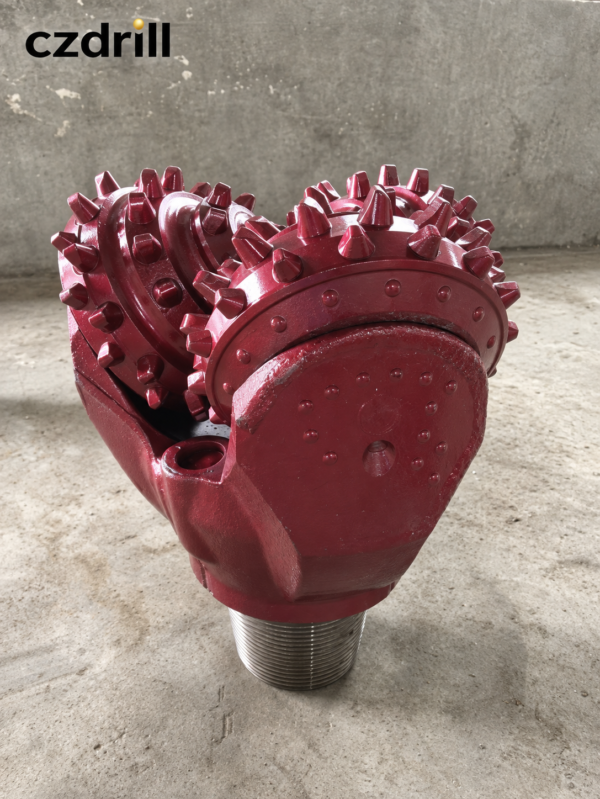
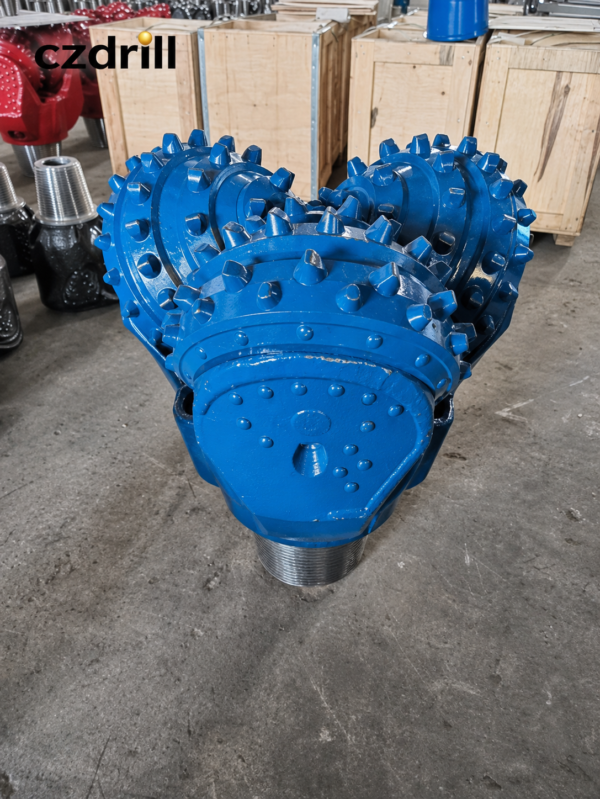
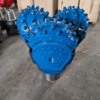
17‑1/2″ Inch Tricone Bit IADC 437G for Soft Formations
17 1/2″ (444.5 mm) IADC 437G Tricone Drill Bit | TCI Sealed Bearing
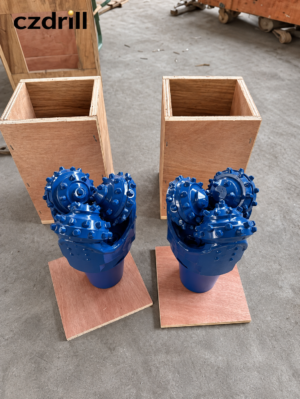
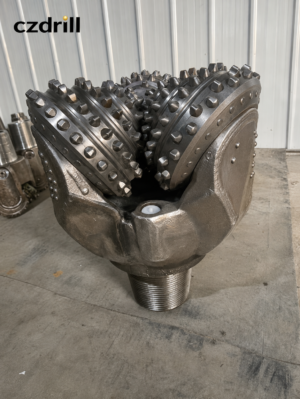
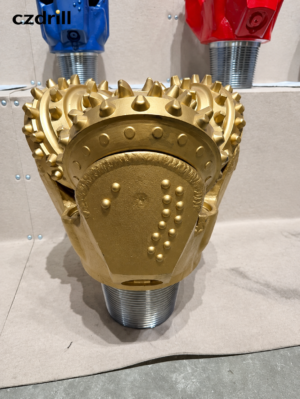
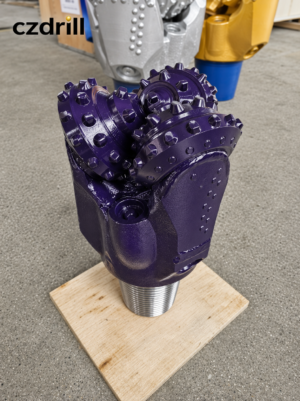
This 17 1/2 inch (444.5 mm) IADC 437G tricone drill bit is designed for soft formations with low compressive strength and good drillability, such as soft shale, clay, mudstone, chalk, salt rock and unconsolidated sandstone. Tungsten carbide inserts are optimized for cutting and fragmentation, delivering fast penetration speed and high rock-breaking efficiency. The sealed journal bearing (elastomer or metal-to-metal seal optional) reduces bearing wear and supports longer single runs, while G-type gauge protection stabilizes the borehole diameter and reduces reaming. With high load-bearing capacity, this extra-large-diameter bit suits large rotary drilling rigs, and mud circulation passages and nozzles provide effective cooling and cuttings removal. API compliant, with API REG thread available. IADC code can be customized.
Applications: large-diameter water well drilling, oil and gas drilling, geological exploration, large-size pile foundations, shallow mine drilling and large-dimension pilot hole construction.
What Is a 17 1/2 Inch (444.5 mm) Tricone Drill Bit?
A 17 1/2 inch tricone bit (metric equivalent: 444.5 mm tricone bit) is a heavy-duty rotary cutting tool engineered specifically for large-diameter drilling operations. Featuring three synchronized rotating cones fitted with precision-engineered cutting elements, this tool delivers high-performance rock fragmentation through a combined crushing, gouging, and scraping action.
In deep drilling operations, this large diameter tricone bit serves as the industry standard for drilling top-hole sections and running surface casing strings.
Core Features at a Glance
- Nominal Diameter: 17 1/2 inches (444.5 mm)
- Cutting Structure: Available with milled steel teeth or high-grade tungsten carbide inserts (TCI) to match formation hardness
- Cutting Mechanism: Independent roller cones that rotate on precision journals or roller bearings to pulverize formation rock efficiently
- Hydraulic Optimization: Multi-nozzle fluid channels that maximize hole-cleaning efficiency and eliminate bit balling in high-volume cuttings environments
- Primary Role: Establishing clean, vertical, large-bore holes for oilfield surface casing, geothermal conduits, and municipal water extraction wells
Understanding the IADC 437G Code
When selecting a large diameter roller bit for surface and intermediate hole sections, reading the classification standard correctly saves time and field costs. The 4-digit classification developed by the International Association of Drilling Contractors (IADC) tells you exactly how the bit is engineered to cut and survive downhole:
- First Digit (4) – Cutting Structure: Represents a tungsten carbide insert (TCI) bit designed for soft formations with low compressive strength, such as soft shales, clays, sands, and soft limestone.
- Second Digit (3) – Hardness Degree: Specifies the formation hardness class within the soft spectrum. A rating of 3 uses chisel or conical inserts with maximum projection to ensure fast penetration rates.
- Third Digit (7) – Bearing and Gauge Design: Signifies a sealed journal bearing with full gauge protection on the cone heels. The journal bearing handles heavy weight-on-bit (WOB) without premature mechanical failure.
- Suffix Letter (G) – Gauge Enhancement: Denotes reinforced gauge protection, incorporating additional carbide inserts along the heel rows to resist abrasive wall wear and maintain a true 17 1/2 inch bore diameter.
Our high-performance IADC 437 TCI tricone drill bit leverages this configuration to deliver reliable durability and steady penetration rates across demanding drilling programs.
Key Specifications
We build every 17 1/2 inch tricone bit to maintain stability, deliver clean hole gauge, and handle high weight-on-bit across demanding drilling runs. The table below outlines the core parameters for this 444.5 mm tricone bit:
| Parameter | Standard Value |
|---|---|
| Nominal Diameter | 17 1/2 inch (444.5 mm) |
| IADC Classification | 437 / 437G |
| Cutting Structure | Tungsten Carbide Inserts (TCI) / Chisel Inserts |
| Bearing System | Sealed Journal Bearing / Elastomer O-Ring Seal |
| Standard Thread Connection | 7 5/8″ API Regular Pin |
| Gauge Row Protection | Tungsten carbide inserts on gauge bevel |
| Circulation System | 3 interchangeable jet nozzles |
| Target Formations | Soft with low compressive strength (shale, clay, soft limestone) |
Every large diameter tricone bit leaves our facility built to strict API tolerances and tested under rigorous manufacturing and engineering standards to ensure dependable penetration rates on site.
Why Choose a Large Diameter Tricone Bit?
When drilling surface hole sections or setting conductor casing, hole stability and penetration rates dictate your daily operating costs. We design our 17 1/2 inch tricone bit solutions to handle heavy loads, clear massive volumes of cuttings, and keep the borehole true from spud to target depth. Opting for a dedicated large diameter tricone bit over multiple hole-opening runs eliminates extra trips and minimizes rig time.
Operational Advantages at a Glance
| Advantage | Direct Impact on Drilling Operations |
|---|---|
| High Penetration Rates | Aggressive tooth geometry delivers fast ROP in top-hole formations. |
| Borehole Integrity | Maximizes hole straightness to ensure smooth casing runs and cementing jobs. |
| Heavy Load Capacity | Rugged bearing designs withstand higher weight on bit (WOB) without premature failure. |
| Hydraulic Efficiency | Multi-nozzle layouts move heavy rock cuttings rapidly away from the bottom hole. |
Drilling a clean 444.5 mm hole in a single pass protects your bottom line. Check our comprehensive procurement guide for tricone drill bits to see how optimizing bit selection improves downhole efficiency across demanding field projects.
Sealed Bearing Technology Explained
The bearing system is the heart of any reliable 17 1/2 inch tricone bit. When drilling large-diameter holes, extreme downhole weight and high torque place immense stress on the cones. Without an advanced sealing mechanism, abrasive drilling mud quickly invades the bearing package, leading to premature wear, cone locking, and costly trips out of the hole.
To prevent early failure in every large diameter tricone bit we manufacture, we utilize high-performance elastomeric seals paired with specialized synthetic lubricants. This sealed environment isolates critical moving parts from harsh drilling fluids, ensuring consistent rotation across extended bit runs.
Key advantages of our sealed bearing design include:
- Contaminant Exclusion: Robust O-ring seals provide an uncompromising barrier against grit, high pressures, and corrosive mud.
- Optimized Load Distribution: Utilizing industrial-grade precision bearings enables smooth weight transfer across the journal and thrust faces.
- Pressure Compensation: An integrated grease reservoir balances internal bearing pressure with external borehole hydrostatic pressure, preventing seal blowout.
- Extended In-Hole Hours: Protected contact surfaces dramatically reduce friction and heat buildup, maximizing bit life in challenging soft-to-medium formations.
By keeping grease in and mud out, this sealed bearing assembly ensures your 17 1/2″ bit maintains peak penetration rates and mechanical integrity until target depth is reached.
Gauge Protection (G Suffix) Benefits
Maintaining a true, full-diameter hole is vital when running a 17 1/2 inch tricone bit. In standard drilling setups, abrasive formation contact quickly rounds off outer teeth, leading to under-gauge boreholes, sticking risks, and extra reaming runs for subsequent casing strings.
The “G” suffix indicates enhanced gauge protection specifically engineered into our cones and shirt-tails to secure bit diameter throughout the run.
Why Gauge Protection Matters on Large Diameter Bits
- Full-Gauge Hole Integrity: Ensures your 444.5 mm borehole remains straight, clean, and full-sized down to planned depth.
- Extended Cutting Life: Hardfacing and reinforced gauge inserts reduce abrasive wear on outer rows during long-interval drilling.
- Reduced Reaming Time: Casing and subsequent drilling assemblies pass through without hanging up on tight spots.
- Lower Operating Costs: Eliminates premature bit replacement caused purely by diameter loss.
Standard vs. G-Suffix Gauge Protection
| Feature | Standard Bit Configuration | G-Suffix Gauge Protection |
|---|---|---|
| Gauge Row Design | Conventional steel teeth / standard inserts | Reinforced tungsten carbide gauge inserts |
| Wear Resistance | Basic protection for low-abrasion formations | High-abrasion resistance for extended runs |
| Borehole Quality | Prone to hole tapering in abrasive sand | Maintains full diameter without tapering |
| Shirt-tail Hardfacing | Standard coverage | Heavy-duty carbide hardfacing applied |
| Re-entry Performance | May require hole reaming on subsequent trips | Casing runs smoothly to bottom |
On any large diameter tricone bit, outer diameter integrity directly controls overall drilling economics. For tailored gauge configurations suited to your specific lithology, reach out to our team through our contact page to discuss customized insert layouts.
Mud Circulation and Nozzle Design
Efficient hydraulics keep a 17 1/2 inch tricone bit cutting cleanly through formations without balling up. In large-diameter boreholes, shifting massive volumes of cuttings out of the hole demands a tailored fluid circulation system.
We engineer our large diameter tricone bit bodies with optimized fluid channels and interchangeable jet nozzles to balance pressure drop and bottom-hole cleaning:
- Replaceable Carbide Nozzles: Threaded nozzle inserts allow field crews to dial in specific flow rates and jet velocities based on pump capacity and mud weight.
- Targeted Jet Stream Geometry: Strategically angled fluid streams aim directly at the cutting structure and hole bottom. This instantly sweeps away loose rock debris and prevents sticky clays from packing between the cutting cones.
- Maximum Flow Area: Sizable junk slots between the bit legs ensure unrestricted upward flow of drilling fluids and cuttings, cutting down annular backpressure.
- Cone Shell Flushing: Controlled side-stream flow cools the bearing packages continuously while preventing fine formation solids from settling around the seals.
Maintaining clean cutting surfaces and dependable hydraulics keeps drilling smooth and extends overall bit life during intense runs.
Best Tricone Bit for Soft Formations
Drilling through unconsolidated sands, sticky clays, and soft shales requires aggressive cutting action rather than heavy crushing force. We engineer the 17 1/2 inch tricone bit to maximize penetration rates in low compressive strength rock, delivering an optimal tricone bit for soft formations.
Key engineering features built for soft strata include:
- High Tooth Protrusion: Widely spaced inserts with tall crests gouge deep into low-strength formations while shedding sticky cuttings instantly.
- Aggressive Cone Offset: Cone geometry is designed with large offset angles to maximize scraping and gouging, which dramatically accelerates top-hole advance rates.
- Effective Bottom-Hole Cleaning: Strategic fluid flow clears cuttings swiftly away from cutting elements like the GT537 tricone cone cutter, preventing bit balling and maintaining optimal tooth-to-rock contact.
This dedicated configuration ensures our large diameter tricone bit maintains continuous, rapid penetration with balanced torque throughout demanding upper-hole drilling operations.
Applications of a 17 1/2 Inch Tricone Bit
A 17 1/2 inch tricone bit is engineered primarily for large-diameter drilling projects where opening a stable, true-gauge upper wellbore is critical. We build these tools to handle heavy spudding conditions, high fluid circulation volumes, and unconsolidated upper strata.
Primary Industry Use Cases
- Oil and Gas Surface Hole Sections: Drilling the initial top-hole section to set surface casing, isolating fresh water aquifers, and preventing wellbore collapse before reaching deeper pay zones. While operators frequently transition to a PDC drill bit with 1913 cutters for deeper, uniform intervals, our large diameter tricone bit remains the standard for spudding through loose gravel and upper formations.
- Deep Water Well Drilling: Ideal for high-capacity municipal, agricultural, and industrial water wells requiring large casing strings to support high-volume submersible pumps.
- Geothermal Top-Hole Drilling: Capable of clearing broken volcanic ash, loose overburden, and weathered surface rock when setting conductor and surface casings on geothermal sites.
- Mining and Civil Construction: Used to drill foundation piling shafts, bridge pier anchors, and large-diameter pilot holes for mine ventilation shafts.
Formation Suitability Matrix
| Application Category | Common Target Formations | Operational Benefit |
|---|---|---|
| Surface Casing Runs | Clays, silts, loose sands, gravel beds | Prevents bit balling while maintaining high penetration rates |
| Commercial Water Wells | Alluvial sands, porous sandstone, soft shale | Clears large cuttings fast with optimized mud flow |
| Geothermal Boreholes | Decomposed rock, soft claystone, weathered basalt | Maintains strict hole gauge for trouble-free casing runs |
How to Choose the Right Tricone Bit
Selecting the correct 17 1/2 inch tricone bit comes down to matching your ground conditions, rig capabilities, and operational targets. A mismatch leads to premature wear, low penetration rates, and unnecessary trips out of the hole. For procurement teams balancing budget and run-life, our comprehensive guide to sourcing industrial drilling bits outlines key criteria to evaluate before ordering.
Here is the quick-check matrix we use to guide drillers toward the best tool for their project:
| Selection Factor | Primary Consideration | Recommendation for 17 1/2″ Operations |
|---|---|---|
| Formation Hardness | Compressive strength & abrasiveness | Choose milled tooth for soft shales; select TCI inserts for abrasive sands or limestone. |
| IADC Classification | Matching tooth spacing and structure | An IADC 437 tricone bit handles low-compressive, sticky top-hole layers reliably. |
| Bearing System | Expected rotary hours & mud quality | Run sealed journal bearings to maximize downhole life in continuous surface-hole drilling. |
| Hydraulics & Flow | Mud weight, hole cleaning velocity | Optimize replaceable nozzle sizes to clear cuttings efficiently around this large profile. |
| Hole Enlargement Needs | Stepped diameter drilling | Pair a standard bit run with a tricone hole reamer when expanding pilot holes in variable strata. |
Essential Steps Before Ordering
- Analyze Local Well Logs: Always confirm the unconfined compressive strength (UCS) of your target depth before locking down insert profiles.
- Verify Rig Torque and Weight on Bit (WOB): Running a large diameter tricone bit requires steady weight and sufficient mud volume to prevent balling in soft, plastic formations.
- Assess Gauge Requirements: In abrasive formations, select added heel row inserts or gauge protection to ensure the hole stays in gauge from surface to casing depth.
FAQ
What does IADC 437G mean?
The IADC 437G classification identifies a roller cone bit designed for soft formations with high drilling efficiency. Here is how the code breaks down:
- 4: Indicates a tungsten carbide insert (TCI) cutting structure designed for low compressive strength formations.
- 3: Specifies soft-to-medium formation capability with optimized tooth projection and spacing.
- 7: Denotes a sealed friction (journal) bearing with advanced wear resistance.
- G: Represents enhanced gauge protection reinforced with carbide inserts on the cone gauge surfaces.
An IADC 437 tricone bit delivers an optimal balance of fast penetration rates and extended downhole bearing life.
Can the IADC code be customized?
Yes. We customize tooth profiles, insert geometry, nozzle orientations, and gauge configurations to match specific lithological strata. When drilling through interbedded layers or abrasive sands, sourcing direct from industrial bit manufacturers allows you to modify the cutting structure and bearing packages to target exact downhole conditions.
What formations suit a 17 1/2 inch tricone bit?
A 17 1/2 inch tricone bit rated at IADC 437 is built primarily as a dedicated tricone bit for soft formations. It performs reliably across:
- Unconsolidated sands and soft gravels
- Sticky clays and mudstones
- Soft shales and marls
- Low-density limestone and evaporites
This 444.5 mm tricone bit maintains steady weight transfer and stable hole opening during surface hole and conductor casing runs.
What thread connection does this bit use?
A standard large diameter tricone bit of this size features a 7 5/8 inch API Regular (REG) pin connection. This heavy-duty threaded joint ensures high torsional strength, resists severe bending moments in large surface holes, and matches industry-standard drill collars.
Is this tricone bit API compliant?
Yes, all of our bits are engineered and manufactured strictly adhering to API Spec 7-1 and ISO 9001 quality standards. Every 17 1/2 inch tricone bit undergoes rigorous magnetic particle inspection, ultrasonic weld integrity checks, and precision gauge calibration before leaving the facility.