
WhatsApp:+86 19933284353
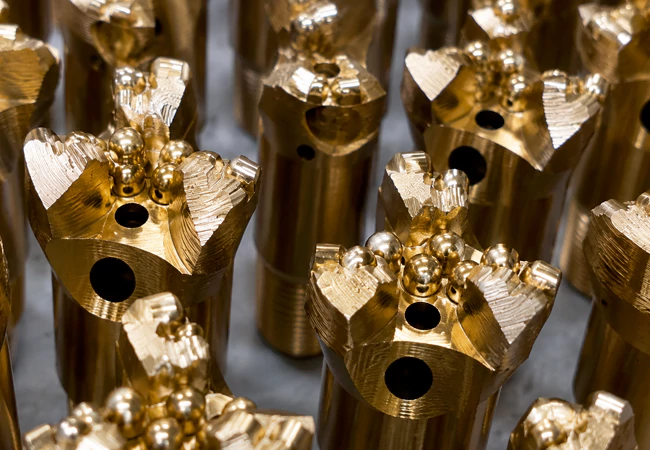

In high-stress exploration and heavy industrial drilling sectors—encompassing petroleum extraction, deep geothermal energy tapping, open-pit mining, and large-scale Horizontal Directional Drilling (HDD)—the tricone drill bit is the defining factor of a project’s economic viability. As operational expenses climb, procurement managers, drill superintendents, and engineering directors face the continuous challenge of balancing initial Capital Expenditure (CapEx) against the downhole Rate of Penetration (ROP) and long-term Total Cost of Ownership (TCO).
This comprehensive technical guide delivers an engineering-grade evaluation framework for sourcing premium tricone bits, selecting appropriate cutting structures, and mitigating global supply chain risks.
Section 1: Technical Definition and Industrial Application Scope
A tricone drill bit is a highly engineered mechanical rock-destruction tool featuring three distinct conical cones mounted on precision bearing journals. These cones rotate independently as the bit body turns at the bottom of the drill string. The rock-breaking mechanism relies on a continuous combination of crushing, gouging, and scraping actions. This dual mechanical approach allows operators to penetrate a highly diverse spectrum of geological formations—ranging from soft, low-compressive-strength alluvial clays and plastic shales to ultra-hard, highly abrasive strata like quartz sandstone, chert, dolomite, and interbedded granitic formations.
Within the global heavy industrial infrastructure framework, tricone bits serve as the essential execution components across several vital sectors:
- Oil & Gas Exploration: Drilling vertical, directional, and horizontal production wells through highly variable geological layers.
- Geothermal Energy & Water Wells: Penetrating deep, high-temperature crystalline rock environments to tap into high-enthalpy aquifers.
- Mining & Quarrying: Executing large-diameter blast hole drilling in iron ore, copper, and coal extraction operations.
- Trenchless Infrastructure: Enlarging pilot holes in Horizontal Directional Drilling (HDD) for cross-country oil, gas, and utility pipeline installations.
Section 2: The B2B Strategic Advantage of Direct Source Sourcing
For international procurement teams, moving away from multi-tier trading brokers and establishing direct engineering relationships with source manufacturers is a proven strategic lever. Sourcing directly from dedicated, full-industry-chain manufacturers allows enterprises to eliminate middleman margins while gaining direct access to custom metallurgy and engineering modifications tailored to specific regional drill sites.
Strategic Sourcing Value Matrix
| Procurement Factor | Direct Source Factory Advantage | Global Project Market Impact |
| CapEx & Financial ROI | Elimination of commercial markups; significantly lower unit cost per bit. | Lowered cash flow requirements per linear meter drilled; accelerated project payback periods. |
| Engineering Flexibility | Direct access to OEM & ODM custom layouts (e.g., localized tooth profiles, custom API threads, and tailored hardfacing). | Seamless integration with unique rig specifications; optimized downhole compatibility that prevents premature tool failures. |
| Supply Chain Integration | Closed-loop integration of raw manufacturing, downhole parameter tracking, and dedicated technical support. | Drastic reduction in operational downtime; seamless alignment with global project schedules. |
Section 3: Engineering Classifications and Technical Trends
The modern drilling industry is undergoing a significant transition toward materials optimization, advanced bearing lubrication, and specialized tooth geometries to overcome severe downhole challenges like bit balling, bore deviation, and premature bearing failure.
Core Cutting Structures
1. Mill Tooth Bits (Steel Tooth Series)
Precision-machined directly from high-strength alloy steel forgings, the teeth are milled into optimal wedge configurations. The cutting edges are subsequently layered with a premium tungsten carbide hardfacing via automated torch processes. This architecture provides high impact resistance and is engineered to optimize scraping action in soft-to-medium formations with lower compressive strengths.
2. Tungsten Carbide Insert (TCI) Bits
Engineered for hard, abrasive rock formations where steel teeth would dull rapidly. High-grade tungsten carbide inserts are mechanically pressed into precision-drilled holes on the cones. The insert shapes are varied based on targeted geologies: chisel-shaped inserts maximize cutting action in medium-hard rocks, while spherical/button inserts deliver pure crushing power in ultra-hard, high-compressive-strength strata.
Tricone Bit Engineering Specification Matrix
| Machine / Tool Type | Best Used For | Key Engineering Advantage & Industry Tolerance |
| Milled Tooth Tricone Bit | Soft shale, clay, unconsolidated sands, and soft limestone. | Superior tooth toughness; maximizes ROP via long, widely spaced teeth; IADC series 1, 2, and 3. |
| TCI Tricone Bit (Chisel Inserts) | Medium-hard formations, including dolomite, hard limestone, and abrasive sandstone. | High gouging efficiency; optimized tooth projection height; typical gauge wear tolerance maintained within ±0.05 mm. |
| TCI Tricone Bit (Button Inserts) | Ultra-hard formations like quartzite, chert, granite, and igneous rock. | Compressive crushing mechanism; maximum insert density to eliminate premature breakage; IADC series 7 and 8. |
| Sealed Journal Bearing Bit | High-RPM drilling, directional motor applications, and deep, extended-reach wells. | Floating silver-plated bearing washers; synthetic lubricant isolation; extends downhole run times by >35%. |
Section 4: Hardcore Trust and Material Standards
Long-term tool survivability in high-temperature, high-pressure (HTHP) underground operations depends entirely on metallurgical excellence and precision structural manufacturing.
Material Standards & Component Integrity
- Premium Steel Substrates: The entire bit body and cone structures are forged from premium AISI 4145H or 20CrNiMo high-strength alloy steel. Subjected to advanced multi-stage quenching and tempering sequences, these substrates develop an optimal combination of high core toughness and excellent fatigue resistance.
- Advanced Bearing Systems: Premium tricone assemblies incorporate a sophisticated sliding or roller bearing system featuring precision-ground journal pins. Critical friction surfaces are silver-plated or inlaid with specialty alloys to prevent galling under extreme weights on bit (WOB). Fluid isolation is managed via a high-temperature elastomeric radial seal backed by a pressure-compensated grease reservoir.
- Tungsten Carbide Hardfacing: Applied along the critical shirt-tail edges and gauge pads, a premium tungsten carbide matrix acts as an armor layer to protect the bearing housing from abrasive rock cuttings suspended in the return mud stream.
Global Certification & Verification Framework
| Industrial Standard | What It Validates | Why It Matters for Global Procurement |
| API Spec 7-1 Compliance | Validates thread dimensions, taper profiles, pitch tolerances, and product serialization against global oilfield standards. | Ensures unconditional compatibility with universal drill pipes (REG, IF, NC connections) without risking connection failures. |
| ISO 9001:2015 Integration | Certifies end-to-end quality control tracking from raw steel ingot chemistry verification to final post-weld machining inspections. | Guarantees batch-to-batch component uniformity and minimizes downhole structural failures across multi-bit orders. |
| IADC Coding Alignment | Classifies the cutting structure, bearing design, and gauge protection according to uniform International Association of Drilling Contractors categories. | Simplifies technical evaluations, enabling engineers to match rock compressive strengths perfectly using a standardized global system. |
Section 5: Buyer Sourcing and Risk Mitigation Guide
To eliminate supply chain uncertainty and protect field operations from costly downtime, professional procurement managers should implement a standardized verification framework before authorizing tool shipments.
1. Verification of Manufacturing Infrastructure
Ensure the prospective vendor operates a fully realized, integrated workshop capable of handling the entire manufacturing lifecycle internally. Sourcing from a supplier that maintains comprehensive control over raw material forging, CNC turning, precision tooth milling, heat treatment, and final quality assurance checks removes intermediate third-party quality risks and stabilizes lead times.
2. Implementation of Remote Auditing Protocols
When on-site international travel is impractical, enforce a strict digital verification process:
- Demand high-definition, live video tours covering the CNC machining floors, automated hardfacing zones, and final inspection stations.
- Verify the existence of advanced quality control equipment, including ultrasonic flaw detectors for checking structural integrity and digital hardness testers used to confirm casing and teeth properties.
3. Factory Acceptance Testing (FAT) Protocols
Before final shipping approval, demand a documented FAT protocol. For high-volume projects or specialized geologies, buyers should arrange to ship rock core samples to the factory testing facility to verify insert retention and cutting performance under simulated conditions.
Furthermore, confirm that every bit undergoes a pressure-integrity test on its bearing seal system and a mandatory thread go/no-go gauge validation to guarantee field-readiness.
4. Heavy Industrial Packaging Standards
Tricone bits are exceptionally dense and heavy, yet their cutting structures and precision-machined threads are susceptible to impact damage during transit. Ensure contract specifications mandate heavy-duty, marine-grade wooden crate packaging. The crate must incorporate internal wooden mandrels to screw down and immobilize the pin thread. Additionally, the bit should be wrapped in a Vapor Corrosion Inhibitor (VCI) moisture barrier to protect precision API threads from saltwater corrosion during transoceanic shipping.
Call to Action (CTA)
Optimizing the total cost per foot drilled requires matching exact downhole parameters with specialized cutter geometries and bearing architectures. Review our field performance documentation by visiting our Related Case Studies page, or connect directly with our application engineering team today to get a detailed technical review and a Customized Turnkey Quote for your next drilling project.